Powerlifting Singlet Guide: How It Should Fit and What to Wear Under It
The singlet is probably the least exciting thing you'll buy for a powerlifting meet.
It doesn't add kilos to the bar. It doesn't make your knees feel better. Nobody spends months debating singlet stiffness the way lifters argue about belts or knee sleeves.
And then you put one on for the first time and immediately have questions.
Is it supposed to be this tight?
Can I wear a T-shirt underneath it?
What about compression shorts?
Why does the leg opening feel different when I squat?
And does the federation actually care what kind of singlet you're wearing?
The short answer is yes, the details matter — but a competition singlet should still be simple.
It needs to fit closely enough that referees can clearly see your body position, stay in place through all three lifts, and comply with the rules of the federation you're competing in.
It should not feel like you're being vacuum-sealed into a wrestling uniform.
Here's what to look for.
Table of Contents
What a Powerlifting Singlet Is Actually For
A singlet gives referees an unobstructed view of the lifter.
That matters most in the squat.
Officials need to see the hip and knee area clearly enough to judge depth. Loose shorts, oversized shirts and baggy clothing make that harder.
The singlet also creates a consistent competition uniform across squat, bench and deadlift.
For most raw lifters, it is not supportive equipment in the way knee sleeves, wrist wraps or a belt are.
A normal Classic powerlifting singlet is made from a non-supportive stretch material. It should move with you rather than actively resist the lift.
That distinction matters because supportive lifting suits belong to Equipped powerlifting and are governed differently.
If you're doing your first raw meet, you are almost certainly looking for a non-supportive powerlifting singlet, not an equipped squat suit.
How Tight Should a Powerlifting Singlet Be?
Close-fitting.
Not crushing.
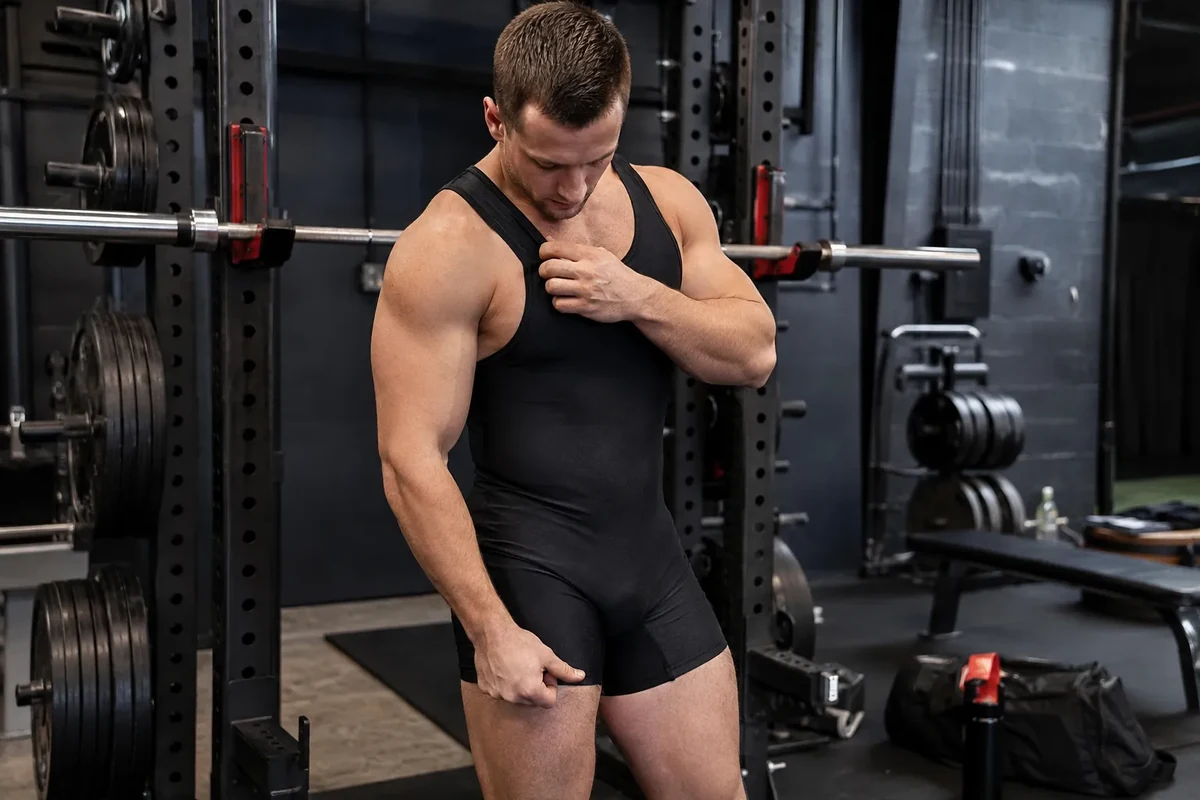
When you stand normally, the singlet should sit against your torso, hips and thighs without large folds of loose fabric.
But "tight" does not mean "buy the smallest size you can physically pull over your shoulders."
A good singlet should let you:
- take a full breath;
- brace normally;
- reach your squat stance without the straps digging hard into your shoulders;
- arch on the bench without the torso feeling excessively stretched;
- set up for the deadlift without the leg openings riding up dramatically.
If you feel like you have to fight the singlet before you even touch a bar, the fit is probably too aggressive.
A competition singlet is supposed to disappear into the background once you're lifting.
Signs Your Singlet Is Too Small
Some singlets look tight but feel completely fine.
That is normal.
The problems start when the garment restricts movement or becomes distracting.
Watch for a few things.
The Shoulder Straps Are Digging In
A little tension through the straps is expected.
Deep pressure into the shoulders or neck is not.
If the singlet constantly pulls upward through the crotch because the torso is too short, sizing up may make more sense than hoping it "breaks in."
You Can't Brace Comfortably
Your abdomen expands when you take a competition breath.
Your singlet needs to allow that.
If the torso feels so restrictive that you notice it every time you brace under a squat bar, you're not gaining anything from the tighter fit.
The Leg Openings Roll or Pull Up
The legs should stay reasonably flat against your thighs.
A singlet that is too small can pull the leg openings upward when you squat or deadlift, especially on lifters with larger quads.
A little movement is normal.
Constantly having to drag the legs back down is not.
Getting It Over Your Hips Is a Full Workout
There is a difference between snug competition clothing and needing a spotter to get dressed.
If the seams are under extreme tension every time you put the singlet on, you are also making premature wear much more likely.
Signs Your Singlet Is Too Big
Going too loose creates a different set of problems.
If fabric hangs away from your body around the hips, seat or thighs, the singlet may be larger than you need.
You may also notice:
- excess material bunching under your belt;
- loose fabric around the leg openings;
- shoulder straps that do not stay in place;
- the torso shifting noticeably during setup.
The goal isn't compression.
It's a clean, close fit.
If you're between sizes, the manufacturer's size chart is a better starting point than assuming that smaller automatically means more "competition fit."
Should You Size Down for a Meet?
Usually, no.
Not automatically.
This is one of those habits that gets carried over from other powerlifting gear.
Lifters intentionally buy very tight knee sleeves because a tighter sleeve can feel more supportive.
That logic does not transfer particularly well to a non-supportive singlet.
A smaller singlet does not suddenly become equipped gear.
If your normal size gives you a close fit without loose material, there is little reason to force yourself into a smaller one simply because you're competing.
The correct size is the one that fits properly.
Use the Size Chart — but Look at Your Build Too
Bodyweight is usually the first number on a singlet size chart.
It's useful, but it isn't perfect.
Two 200-pound lifters can have completely different builds.
One may carry most of that mass through the torso and shoulders. Another may have much larger glutes and thighs. A third may be unusually tall for the weight class.
Those differences affect singlet fit.
If you're close to the edge between sizes, consider:
Torso length. Tall lifters can feel excessive upward pull even when the width is fine.
Quad size. Larger thighs may make a smaller size uncomfortable around the leg openings.
Shoulder and upper-back size. A heavily developed upper body can make the straps feel tighter than bodyweight alone would suggest.
Waist and hip difference. Lifters with a large difference between waist and hip measurements sometimes find one size fits the torso well but feels much tighter through the lower half.
This is why trying the singlet on well before the meet matters.
Do not let weigh-in morning be the first time you discover how it fits.
What Should You Wear Under a Powerlifting Singlet?
This is where the answer depends on both the lift and your federation.
For IPF-style competition, the general setup is straightforward.
Underwear
Standard commercial underwear or an athletic supporter can be worn underneath the singlet as long as it complies with the federation's rules.
The important distinction is that ordinary underwear is not supposed to function as additional supportive equipment.
Compression-style garments can become a rules issue depending on their construction and the federation.
If you're unsure whether something crosses that line, ordinary briefs are the simple option.
T-Shirt
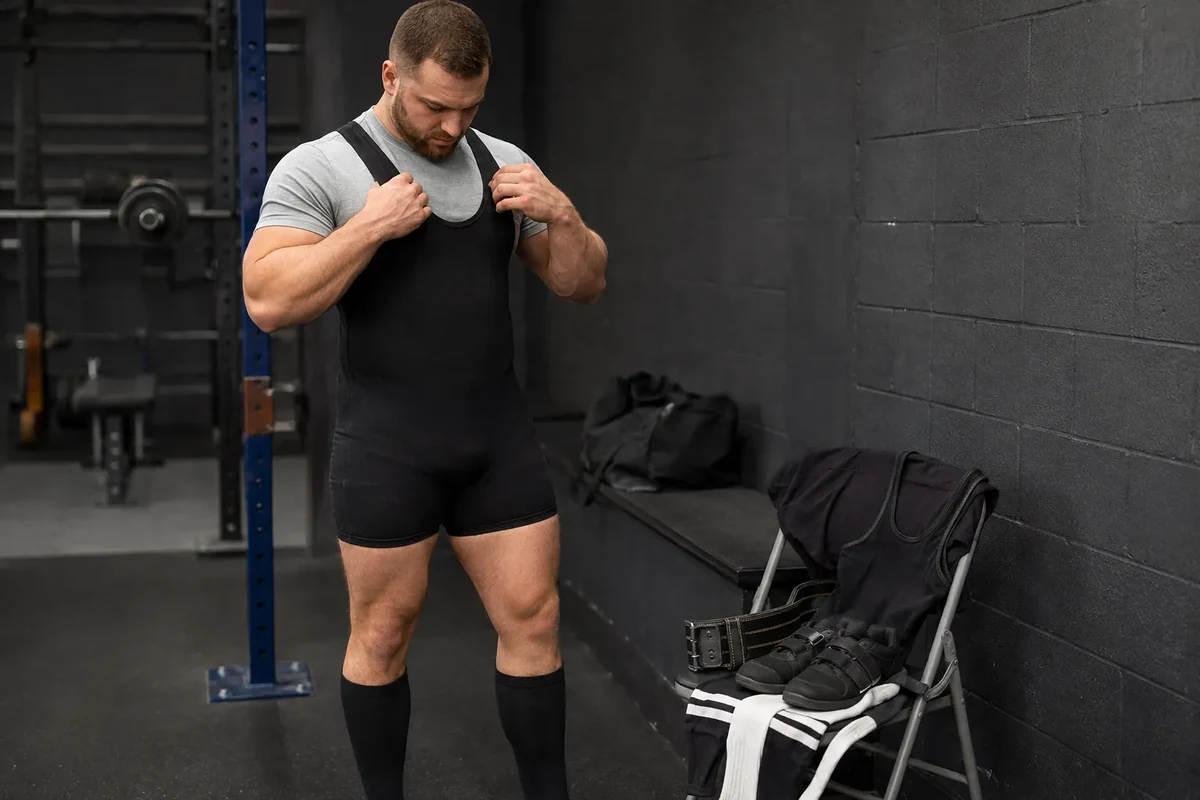
For IPF competition, a T-shirt is worn under the singlet for the squat and bench press.
It must meet the relevant construction and logo requirements.
The shirt should fit closely enough that it doesn't bunch excessively under the singlet, but it does not need to feel painted onto your body.
A plain cotton or approved competition shirt is usually the least complicated choice.
For deadlift, federation rules can differ on whether a T-shirt must be worn.
This is one of those details worth checking before meet day rather than assuming all organizations handle it identically.
Compression Shirt
Don't assume your favorite tight gym shirt is automatically competition legal.
Some federations restrict supportive or rubberized materials, and logo rules can also matter.
A shirt being comfortable for training and a shirt being accepted at equipment inspection are two different questions.
If you want the easiest possible setup for your first meet, keep the shirt simple.
Can You Wear Compression Shorts Under a Singlet?
This is another common first-meet question.
Do not assume that normal gym compression shorts are permitted simply because they fit underneath the singlet.
Powerlifting rules often distinguish between ordinary underwear and garments that could provide additional support.
If you compete under IPF rules, use underwear that satisfies the Technical Rulebook rather than treating the singlet as permission to hide another layer underneath.
For other federations, check their current clothing rules.
If you're choosing between bringing questionable compression shorts and bringing ordinary compliant underwear, the second option creates a lot less drama at equipment inspection.
What About a Sports Bra?
For women, a sports bra may be worn under the singlet subject to federation requirements.
The same general principle applies: it should be normal athletic clothing rather than something designed to provide mechanical lifting support.
Fit matters here too.
Your meet is not the place to discover that a new sports bra and a new singlet pull against each other every time you set your shoulders for bench.
Train in the combination first.
Does the Singlet Go Under or Over the Belt?
The belt goes over the singlet.
That sounds obvious once you've seen a meet, but it's a surprisingly common beginner question.
You put on the singlet, then position the belt where you normally wear it.
The singlet fabric should lie reasonably flat under the belt.
If there is a huge amount of fabric folding under the belt, that can be another sign that the singlet is too loose through the torso.
One useful thing to test before meet day is whether your preferred belt position changes slightly over the singlet.
It often does.
A belt sitting directly against a gym T-shirt can feel different once the singlet material is underneath it. If your belt fit is still inconsistent, use the powerlifting belt sizing guide before meet week.
Where Should the Leg Openings Sit?
The legs should cover the upper thighs while leaving the knee area clearly visible.
You do not want the singlet legs interfering with knee sleeves.
You also do not want them riding so high that you're constantly adjusting them between attempts.
Different singlet designs use slightly different leg lengths and cuts, so there is no universal point on the thigh where every model will end.
What matters is that the garment complies with the federation's requirements and stays out of the way of your knee equipment.
For lifters with large quads, this is one of the most important reasons to try a singlet on before buying a second one in a smaller size.
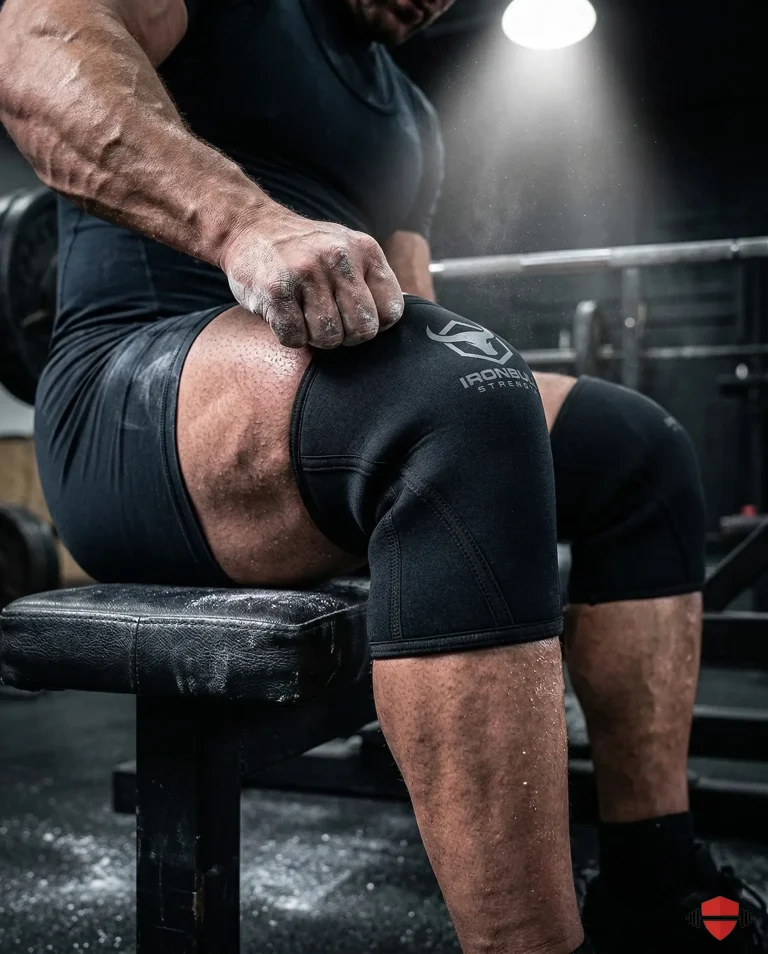
Can the Singlet Touch Your Knee Sleeves?
This is worth paying attention to.
Under IPF rules, knee sleeves have their own positioning requirements, and the singlet should not create an overlapping mess around the knee.
In practice, a correctly sized singlet and correctly positioned knee sleeves usually leave a visible section of thigh between them.
If the singlet legs are constantly being pulled down over your sleeves — or the sleeves are being pulled unusually high to meet the singlet — something about the setup needs to be checked.
Do not use clothing position as a way to work around equipment rules.
Wear both pieces the way they are intended. If the sleeves themselves are difficult to position, see our guide to putting on tight knee sleeves.
Should You Train in Your Singlet Before the Meet?
Yes.
Not every session.
You don't need to become the person doing Tuesday accessories in a competition singlet.
But you should wear it for at least a few squat, bench and deadlift sessions before meet day.
You want to know:
- whether it changes your belt position;
- whether the straps bother you in the squat;
- whether the legs move when you pull sumo;
- whether your bench setup feels normal;
- whether the shirt underneath bunches;
- whether the knee sleeves and singlet sit cleanly together.
A singlet is simple gear.
That is exactly why you don't want it becoming an unexpected distraction.
Wash It Before the Meet
A new singlet can feel slightly different after its first wash.
Wash it according to the manufacturer's care instructions before competition, especially if you bought it weeks in advance.
Then try it on again.
Do not make meet morning the first time you're wearing a freshly washed piece of competition clothing.
And unless the care label specifically says otherwise, extreme heat is rarely your friend with stretch athletic fabrics.
You are trying to clean the singlet, not shrink it into the next weight class.
Keep a Backup If You Have One
A second legal singlet is not essential for a first local meet.
But if you already own one, bringing it is easy insurance.
Seams fail.
Something gets spilled.
A singlet that fit perfectly three months ago can fit differently after a bodyweight change.
You probably won't need the spare.
That's why it's a good backup.
Do Singlets Have to Be IPF Approved?
If you're competing in an IPF-sanctioned event, your singlet must meet the current IPF requirements, including the applicable manufacturer approval rules.
This is where people get tripped up by the phrase "IPF approved brand."
Do not assume every singlet made by a company is automatically approved because that manufacturer has other equipment on the list.
Check the exact singlet against the current IPF Approved List guide.
The current 2023–2026 IPF approval period runs through December 31, 2026.
If your competition is in 2027 or later, check the new approval information rather than assuming a singlet's 2026 status carries forward unchanged.
For non-IPF federations, use that organization's own approved-equipment and clothing rules.
Don't Confuse a Singlet With an Equipped Lifting Suit
They can look similar to somebody new to the sport.
They are not the same thing.
A Classic singlet is non-supportive clothing.
An Equipped lifting suit is intentionally constructed to provide mechanical support during the lift.
If you're registering for a raw or Classic division, you want the non-supportive option specified by your federation.
If a product description is talking about serious rebound, stopping power or extremely difficult suit straps, you are probably no longer shopping for a normal raw singlet.
What Color Should You Buy?
Whichever legal color you will actually wear.
Black is common for an obvious reason: it is simple, doesn't show every mark, and works with almost everything.
But color is much less important than fit and federation compliance.
Just be careful with logos and custom graphics.
Federations can regulate manufacturer, sponsor and personal logos differently.
For a first meet, a straightforward competition singlet from an accepted manufacturer removes a lot of unnecessary questions.
What If You're Between Two Sizes?
If both sizes are technically within the manufacturer's recommendation, think about what each one is doing on your body.
Choose the smaller size if the larger one clearly leaves loose fabric and the smaller one still allows full movement.
Choose the larger size if the smaller one creates significant pulling through the shoulders, hips or leg openings.
Do not choose based on the label.
Nobody at the meet cares whether the tag says Medium or Large.
They care whether the singlet complies with the rules.
You should care whether you can squat in it.
A Simple Singlet Fit Check
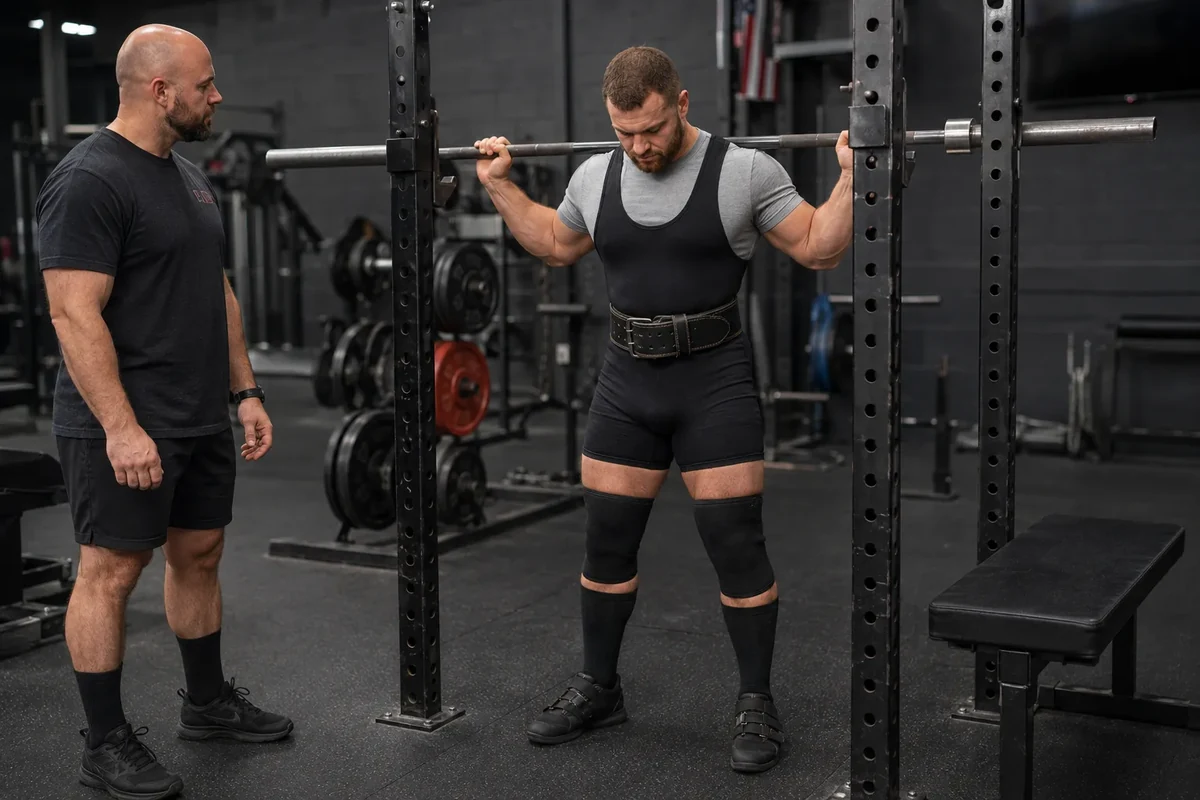
Put the entire competition setup on at home.
Not just the singlet.
Wear the underwear, shirt, singlet, belt, knee sleeves, socks and shoes you intend to use.
Then run through a few basic positions.
Stand Normally
The fabric should sit close to your body without large loose folds.
Take a Full Competition Breath
You should be able to expand your abdomen and brace normally.
Hit Your Squat Depth
The straps and leg openings should stay comfortable through the bottom position.
Set Up on the Bench
Arch and retract your shoulders the way you actually compete.
The torso should not feel like it is pulling you out of position.
Get Into Your Deadlift Start Position
Pay attention to the thighs and crotch, especially if you pull sumo.
Nothing should feel like it is being stretched to the point where you're worried about a seam.
Put Your Belt On
Make sure the singlet doesn't bunch excessively underneath it.
Check the Knee Area
Your singlet and knee sleeves should sit cleanly without unwanted overlap.
If all of that works, you probably have the right fit.
What to Bring to the Meet
The singlet itself is only one part of your clothing setup.
For a typical raw meet, your bag may include:
- Competition singlet
- Compliant T-shirt
- Underwear
- Sports bra if applicable
- Powerlifting belt
- Knee sleeves if used
- Wrist wraps if used
- Competition shoes
- Deadlift socks
- Spare shirt
- Spare socks
- Backup singlet if you own one
Lay those items out before you go to bed.
There are enough things to think about on meet morning without trying to remember which laundry basket contains your deadlift socks.
Frequently Asked Questions
Should a powerlifting singlet be skin tight?
It should be close-fitting, but it does not need to create extreme compression.
You should still be able to breathe, brace and move normally through all three competition lifts.
Can I wear a T-shirt under my singlet?
Yes, and in some federations it is required for certain lifts.
Under current IPF rules, a T-shirt is worn for the squat and bench press and must comply with the federation's clothing requirements.
Can I wear compression shorts under a powerlifting singlet?
Do not assume standard gym compression shorts are automatically allowed. Federations can restrict supportive garments worn underneath the singlet. Check the current rulebook for your federation.
Do I wear my belt over my singlet?
Yes. The belt is worn over the singlet.
Should I size down in a powerlifting singlet?
Not simply because it is for competition.
Use the manufacturer's size chart and choose a size that fits closely without interfering with breathing, bracing or movement.
Can I use the same singlet for squat, bench and deadlift?
For normal Classic/raw competition, yes. You wear your competition singlet through all three lifts, subject to your federation's rules.
Are powerlifting singlets unisex?
Many are sold as unisex, while some manufacturers offer different cuts.
The label matters less than how the actual garment fits your torso, hips, thighs and shoulders.
Do IPF singlets have to be approved?
For IPF competition, the singlet must satisfy the federation's current equipment and manufacturer approval requirements. Check the exact product against the current Approved List rather than relying on the brand name alone.
The Fit You're Looking For
A good powerlifting singlet is boring in the best possible way.
You put it on.
It fits close.
You can breathe.
You can hit depth.
Your belt sits where you want it.
Your knee sleeves don't fight with the leg openings.
Then you stop thinking about the singlet and start thinking about the bar.
That is the goal.
Don't size down just to make it look more "competition."
Don't hide questionable layers underneath it.
And don't leave the first try-on until meet morning.
Get the fit right at home, train in the full setup at least once or twice, check your federation's current rules, and let the singlet be the least interesting part of your meet day.