Powerlifting Belt Sizing Guide: How to Measure for the Right Fit
Buying a powerlifting belt in the same size as your jeans is one of the easiest ways to end up with the wrong belt.
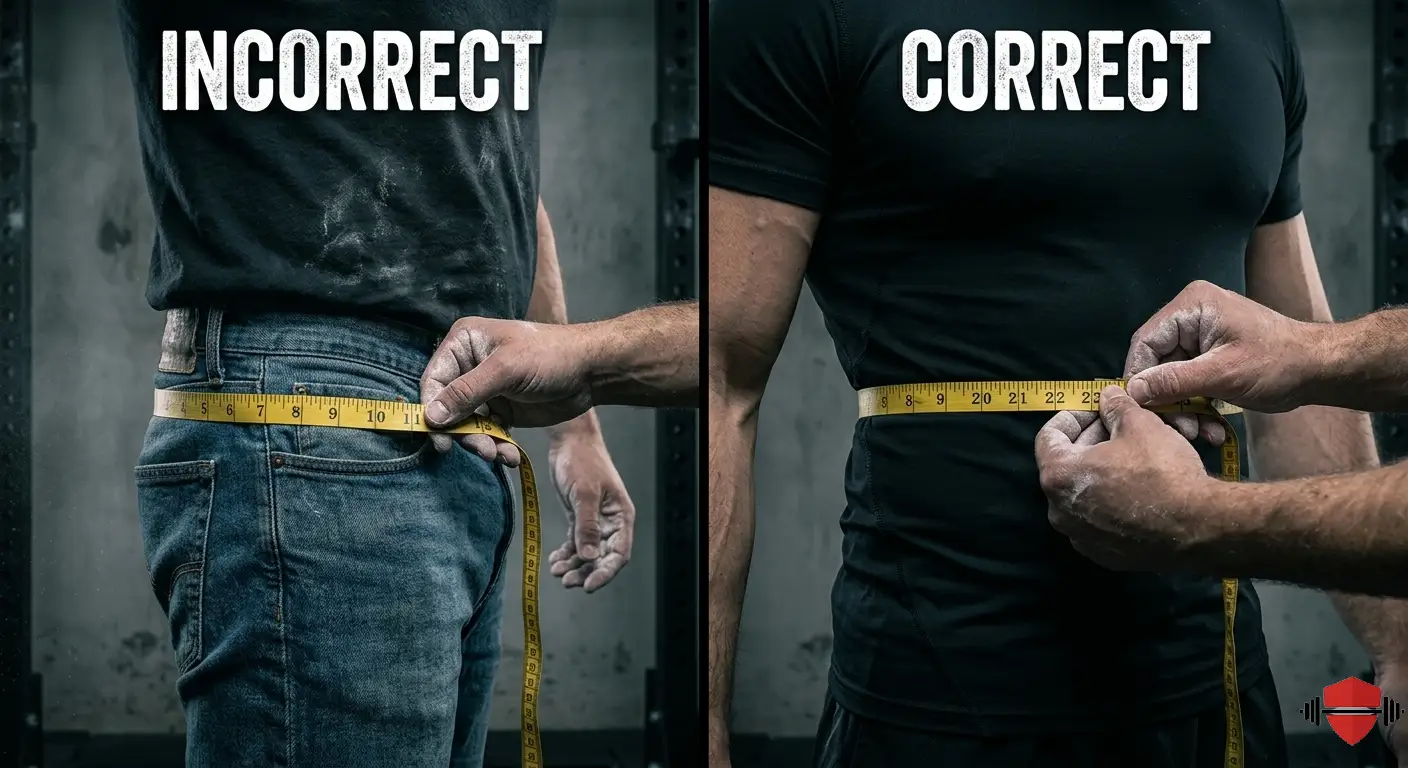
A 34-inch pair of pants does not mean you need a belt made for a 34-inch torso. Clothing sizes are labels. A lifting-belt size chart is based on an actual circumference measurement.
There is another wrinkle: not every belt company tells you to measure in exactly the same way.
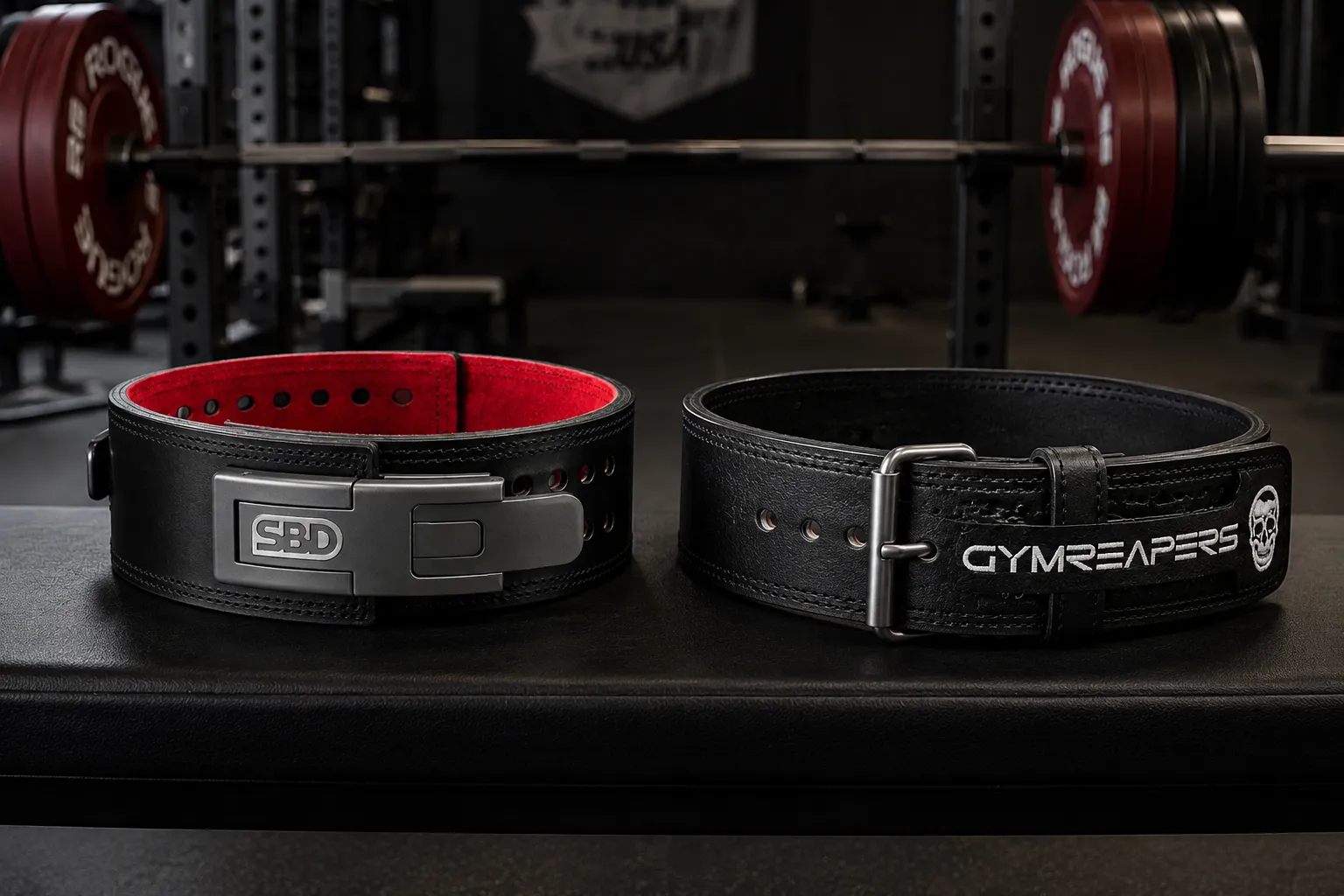
Some tell you to measure at the belly button. Some say to measure wherever the belt will actually sit. SBD asks lifters to measure with the abdominal muscles braced. Gymreapers tells customers to measure around the core with their training clothes on.
That means the best sizing rule is not “always measure exactly here.” It is:
Measure your body where you expect to wear the belt, then follow the current instructions for the exact belt you are buying.
That one habit prevents most of the sizing confusion.
Table of Contents
The 30-Second Version
If you are about to order a belt, this is the process I would use:
- Put on the type of clothing you normally lift in.
- Decide where the belt naturally sits for your squat or deadlift.
- Wrap a flexible measuring tape around that position.
- Keep the tape level and snug without digging it into your body.
- Follow the manufacturer's instructions on whether to measure relaxed or braced.
- Compare the number with the specific size chart for that exact belt.
- If you land near the edge of a range or between two sizes, check the manufacturer's recommendation rather than automatically sizing up or down.
The important part is the number around your torso — not the letter printed inside your jeans.
Where Should a Powerlifting Belt Sit?
There is no single position that works for every lifter.
A lot of lifters wear a powerlifting belt around the navel or slightly above it. But torso length, rib position, hip structure, exercise choice, belt width, and personal preference can shift the belt higher or lower.
That is why “measure exactly at your belly button and nowhere else” is too rigid as universal advice.
SBD currently tells lifters to measure where the belt will sit, which it says is normally just above the navel. Rogue similarly tells customers to take a snug measurement around the position where the belt will actually be worn.
Iron Bull, on the other hand, specifically instructs customers for its current lever belts to measure at belly-button level. Gymreapers uses the belly-button/core area for its current lever-belt sizing.
Those instructions are not really contradictory. They tell you something important: the product's own size chart takes priority over a generic rule from another brand.
Once you have the correct size, our Powerlifting Belt Placement guide shows how to test high and low positions for squats and deadlifts.
How to Measure Yourself
Use a soft tailor's tape rather than a metal construction tape.
Stand normally in the clothing you expect to wear under the belt. A T-shirt can change the measurement slightly compared with measuring directly against bare skin, and some manufacturers explicitly build their sizing guidance around measuring with clothing on.
Place the tape around the position where your belt will sit.
Keep it horizontal around your torso. You do not want the tape climbing up your back or dipping under your stomach.
Then make it snug.
Snug does not mean pulling hard enough to compress your stomach. You are trying to measure your circumference, not see how small you can make it.
Write the number down in inches or centimeters and use whichever unit is shown clearly on the manufacturer's chart.
If you get two noticeably different measurements on repeated attempts, measure again before ordering. A belt is expensive enough that thirty extra seconds with the tape is worth it.
Should You Measure Relaxed or Braced?
This is one of the places where generic belt-sizing advice often goes wrong.
There is no reason to invent one universal percentage of a brace. Follow the instructions for the belt.
For example, SBD currently instructs a buyer who does not already own a belt to measure where the belt will sit with the abdominal muscles braced. It also recommends choosing a size that places the lifter somewhere around the middle of the available range when possible.
Gymreapers instructs customers to measure around the core with clothes on and not to use a pants or waist size. Rogue tells customers to hold the tape snug around the position where the belt will be worn. Iron Bull currently specifies belly-button level and training clothes for its lever-belt sizing.
So rather than trying to convert a relaxed measurement into a made-up “braced measurement,” use the measuring method attached to the product you are actually considering.
Why Your Pants Size Is Not Your Belt Size
This point is worth repeating because several major belt manufacturers explicitly warn about it.
Your pants size is not a direct measurement of the circumference where a powerlifting belt sits. The waistband may sit lower. Clothing brands use their own sizing systems. And a lifting belt normally sits around your torso rather than around the same position as your jeans.
SBD says not to use trouser waist measurements. Gymreapers says not to use pant or waist measurements to determine lever-belt size. Rogue gives the same warning in its fit guidance.
So if your jeans say 32, ignore the 32. Use the tape.
How to Read a Belt Size Chart
The letters are less important than the measurement range.
Imagine a company offers:
- Medium: 30–36 inches
- Large: 34–41 inches
A 35-inch measurement technically fits both.
That does not automatically mean Medium is right. It also does not automatically mean Large is right.
You need to consider how much adjustment room each option leaves and what the manufacturer recommends.
SBD's current size chart is a good example of overlapping ranges. The company says it normally recommends a belt where the lifter falls somewhere around the middle of the range, because that leaves room to adjust tighter or looser as bodyweight, clothing, exercise, or preferred fit changes.
That is useful advice for SBD. It should not be converted into a mathematical rule that applies to every belt on the market.
What If You Are Between Sizes?
Do not automatically size down.
Do not automatically size up.
And definitely do not order the smaller belt just because somebody told you that a powerlifting belt is supposed to hurt.
First, check whether the ranges actually overlap. Then check the manufacturer's sizing notes.
Some brands explicitly tell customers what to do between sizes. Others provide enough overlap that both sizes technically fit but offer different amounts of adjustment in each direction.
Your own situation matters too. If you expect your bodyweight to move during a bulk or cut, adjustment room may matter more than getting the tightest possible fit today. The same applies if you sometimes wear thicker clothing under the belt.
A good purchase leaves you with a usable adjustment range, not just one setting that barely closes.
How Tight Should a Powerlifting Belt Be?
A belt should be snug enough that you can create a firm brace against it.
That does not mean the goal is to close it as tightly as humanly possible.
You still need to take your setup breath. You still need to expand your torso. And you still need to move into your squat or deadlift position without the belt becoming an obvious obstacle.
A new leather belt may also feel stiffer than it will after several sessions. Do not confuse new-belt stiffness with evidence that you ordered the wrong circumference.
At the same time, a belt should not be so loose that it simply moves around your torso without giving you a consistent surface to brace against.
There is a useful middle ground between “barely touching you” and “I need two people to close the buckle.”
Lever Belt Sizing Is Not the Same as Lever Adjustment
This distinction causes a lot of unnecessary confusion.
Sizing determines whether the physical belt is long enough and whether its adjustment range suits your torso.
Lever adjustment determines where the lever mechanism sits within that available range.
On a traditional lever belt, the lever is attached to one of several existing mounting positions. If you want a different setting, you normally unscrew the lever and move it to another set of pre-existing holes. You do not normally drill the belt.
Iron Bull's current lever instructions, for example, describe using a screwdriver to move the lever position along the existing holes.
Once it is set where you like it, the main attraction of a traditional lever becomes obvious: you can close it at the same position from set to set without threading a prong through the belt every time.
Lever vs Prong: Which Gives You More Day-to-Day Adjustment?
A traditional prong belt is easier to change on the fly.
Want it one hole looser for deadlifts? Move the prong. Want it tighter for squats? Move it back. No tools required.
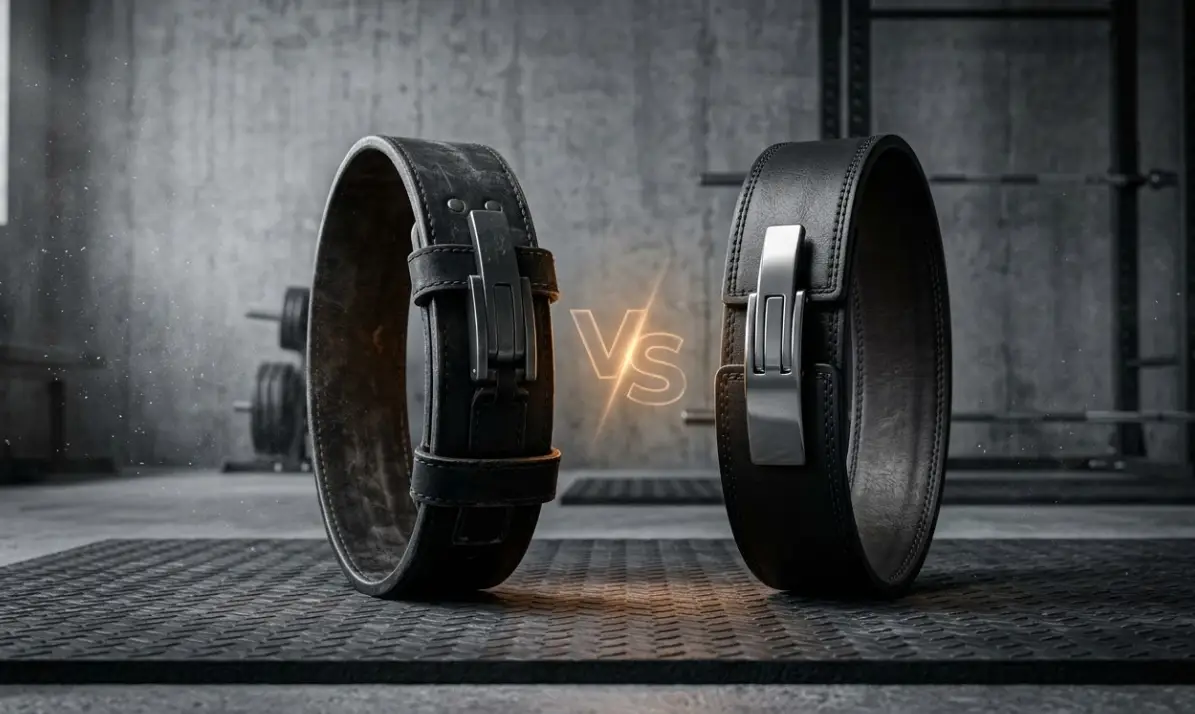
A traditional lever belt is faster to open and close at its established setting, but changing that setting usually means moving the lever hardware.
That does not make the lever inferior. It is simply a trade-off.
And not every lever works the same way.
SBD's lever design is an important exception. Its current belts use a gliding lever system designed to allow more adjustment without repositioning a conventional lever plate in the usual way. See our SBD 13mm Lever Belt review for the product-specific details.
If you have not chosen a closure system yet, our Lever vs Prong Powerlifting Belts comparison goes deeper into that decision.
Does 10mm vs 13mm Change Your Belt Size?
Not necessarily.
Thickness and circumference are different measurements.
A 10mm belt is 10mm thick. A 13mm belt is 13mm thick. Neither number tells you what waist range you need.
The thicker belt will usually feel more rigid, and that can affect comfort around the ribs and hips, but you should still choose the circumference from the product's size chart.
If thickness is the decision you are still working through, see our 10mm vs 13mm Powerlifting Belts comparison before worrying about brand.
For IPF competition, the current Technical Rulebook permits a belt up to 10 cm wide and 13 mm thick along its main length. Those are equipment dimensions, not sizing instructions for your torso. If you compete, our IPF Approved Gear guide explains why dimensions and approved equipment are separate checks.
Belt Width Can Matter for Shorter Torsos
Most traditional powerlifting belts are close to four inches or 10 cm wide.
That does not mean four inches is comfortable for everyone.
If you have a shorter distance between the bottom of your ribs and the top of your pelvis, a wide rigid belt can feel crowded when you set up for a deadlift or reach the bottom of a squat.
A narrower belt may be worth considering in that situation.
This is another reason you should not solve every fit problem by ordering a different circumference. Sometimes the width is the issue. Sometimes the thickness is the issue. And sometimes the belt is simply sitting in the wrong place.
Common Belt-Sizing Mistakes
The recurring mistakes are surprisingly simple:
- using pants size instead of measuring;
- copying another brand's size chart;
- pulling the tape painfully tight;
- automatically sizing down;
- measuring somewhere you would never actually wear the belt;
- ignoring how much adjustment room remains at either end of the range.
One more matters if you compete: do not assume that a belt is competition-approved just because its dimensions look legal.
For IPF competition, equipment approval and physical dimensions are separate questions. A belt can be four inches wide and 13mm thick yet still not be an approved model for an IPF platform.
If competition is part of your plan, check the current official approved-equipment list before ordering.
A Real Example of Why Brand Instructions Matter
Suppose two lifters both measure 35 inches around the position where they wear a belt.
That does not guarantee they should buy the same letter size from two different companies.
Gymreapers currently lists its 10mm lever belt Medium at 30–36 inches and Large at 34–41 inches. A 35-inch measurement falls inside both ranges.
Rogue's current Ohio belt chart lists Medium at 26–33 inches, Large at 31–37 inches, and XL at 34–41 inches. The same 35-inch measurement therefore sits in a completely different part of that brand's chart.
That is why saying “I wear a Medium lifting belt” does not tell another person very much.
A measurement travels between brands. A size letter does not.
If You Already Own a Belt That Fits
You have another useful reference point.
SBD suggests that lifters who already own a belt can measure the circumference of the existing belt at the tightest setting they actually use.
That can be useful if you already know exactly how you like a belt to sit.
It still does not replace the next manufacturer's size chart, but it gives you a real-world reference instead of starting from your jeans label.
Belt Examples Mentioned in This Guide
These are examples for checking current listings and size charts, not a ranking of which belt fits everyone best. Amazon availability, variants and sizing information can change, so verify the exact listing before ordering. Amazon links below are affiliate links.
- Iron Bull Strength 10mm Prong Belt on Amazon
- Iron Bull Strength 13mm Lever Belt on Amazon
- Gymreapers Quick-Release Prong Belt on Amazon
- Gymreapers 10mm Lever Belt on Amazon
- Hawk Sports 10mm Prong Belt on Amazon
For a more direct brand comparison, see IBRO vs Gymreapers 10mm Lever Belts.
Before You Order
Take one final look at four things:
Where will I wear this belt?
Measure that position.
How does this manufacturer tell me to measure?
Use its method.
Where does my measurement fall inside the range?
Check how much adjustment remains in both directions.
Am I buying the right type of belt in the first place?
Circumference will not fix a belt that is too wide, too stiff, or inconvenient for the way you train.
If all four answers make sense, you are much less likely to end up exchanging an expensive leather belt a week later.
Bottom Line
Powerlifting belt sizing is simpler once you stop treating S, M, L, and your pants size as universal measurements.
They are not.
Start with your actual torso. Measure where the belt will be worn. Follow the instructions provided for the exact model. Use the manufacturer's range rather than another brand's chart.
And when two sizes overlap, look at adjustment room and the manufacturer's guidance instead of assuming tighter is always better.
The best belt size is not the smallest one you can force closed. It is the one that gives you a repeatable fit, lets you brace normally, and leaves enough usable adjustment for the way you actually train.
FAQ
Should I use my pants size to choose a powerlifting belt?
No. Major belt manufacturers including SBD, Gymreapers, and Rogue specifically tell customers not to use pants or trouser size as the belt measurement. Measure your torso according to the instructions for the exact belt instead.
Should I measure at my belly button?
Sometimes. Gymreapers and Iron Bull currently instruct customers to measure around the belly-button/core area for their lever belts. SBD says to measure where the belt will sit, normally just above the navel, while Rogue says to measure where the belt will be worn. Follow the instructions for the product you are buying.
Should I size down for a powerlifting belt?
Not as a universal rule. Check the exact manufacturer's size range and its recommendation for people near a boundary or between sizes. A smaller belt is not automatically a better or more supportive belt.
Is it better to be in the middle of the size range?
It can provide useful adjustment room. SBD specifically recommends choosing a belt where your measurement falls around the middle of its sizing range when possible. Other manufacturers may provide different guidance, so treat this as product-specific rather than a universal rule.
Do lever belts have only one size setting?
No. Traditional lever belts normally have multiple mounting positions, but changing the position usually requires moving the lever hardware with a screwdriver. Some designs, such as SBD's gliding lever, provide additional adjustment without working exactly like a conventional fixed lever.
Does a 13mm belt require a different size from a 10mm belt?
Not simply because it is thicker. Use the size chart for the exact model. The 10mm and 13mm measurements describe belt thickness, not your required torso circumference.
Sources for This Guide
- SBD Apparel — 13mm Lever Belt / Size Guide. Measurement position, braced measurement, overlapping size ranges and mid-range sizing guidance.
- Gymreapers — 10MM Lever Belt. Current core-measurement instructions and size ranges.
- Rogue Fitness — Ohio Lifting Belt. Snug measurement around the actual belt position rather than pants size.
- Iron Bull Strength — Lever Belt Guidance. Belly-button sizing instructions and conventional lever adjustment using existing mounting holes.
- International Powerlifting Federation — 2026 Technical Rulebook. Current maximum competition belt width and thickness.