10mm vs 13mm Powerlifting Belts: Which Thickness Fits Your Training?
A 13mm belt looks like the obvious upgrade from a 10mm belt.
Three extra millimeters. More leather. More rigidity. More serious-looking powerlifting gear.
That does not automatically make it the better belt.
For a lot of lifters, 10mm is already plenty of belt. It gives you a firm surface to brace against but has enough give that it is easier to wear through normal training.
A 13mm belt makes more sense when you specifically want a very rigid setup and already know that you like that feeling.
The difference is not really beginner versus advanced.
It is more forgiving versus more rigid.
Table of Contents
First, 10mm and 13mm describe thickness — not width
This sounds obvious, but it gets mixed up surprisingly often.
A typical powerlifting belt can be 10cm / about 4 inches wide whether it is 10mm or 13mm thick.
SBD, for example, currently sells both its 10mm and 13mm Lever Belts at the same 10cm width. The main dimensional difference between those two models is the extra 3mm of thickness. Both are also listed by SBD as IPF approved.
Under the current IPF Technical Rulebook, a competition belt can be no more than 10cm wide and 13mm thick along its main length. Lever, single-prong, and double-prong buckles are permitted by the technical rules, although competitors still need to make sure their exact equipment meets the applicable approved-equipment requirements.
So 13mm is not “beyond normal powerlifting.”
It is simply the upper thickness limit allowed by the current IPF rules.
The quick comparison
| 10mm Belt | 13mm Belt | |
|---|---|---|
| Rigidity | High | Very high |
| Break-in | Usually easier | Usually longer |
| Everyday training | More forgiving | More specialized |
| Heavy squats | Excellent | Excellent if you like maximum rigidity |
| Deadlifts | Often easier to position | Can feel bulky on some torsos |
| First serious leather belt | Usually easier choice | Better if you already know what you want |
| Competition use | Common | Common |
| IPF thickness limit | Below maximum | At maximum |
That table does not mean 10mm is soft.
A properly constructed 10mm leather powerlifting belt is still a substantial piece of equipment.
The difference becomes clearer once you actually think about how the belt has to move around your body.
Why 10mm is such a useful middle ground
A 10mm belt can still feel very stiff when it is new.
It does not fold up like a nylon training belt, and it is not supposed to.
But compared with 13mm, there is a little more give when you bend, set up for a deadlift, or wear the belt through several exercises.
Iron Bull describes its current 10mm belts in much the same way: firm enough for serious strength training but more forgiving for regular use than its thicker 13mm options.
That is why I think 10mm makes sense for more people than powerlifting culture sometimes admits.
Imagine a normal lower-body session:
- squats;
- paused squats;
- Romanian deadlifts;
- rows or accessories.
A belt that gives you a hard surface to brace into without feeling like a piece of furniture wrapped around your waist is useful across all of that.
You do not need the maximum thickness allowed by the rules just because your program includes heavy squats.
When 13mm starts to make sense
The case for 13mm is simple:
you want less belt movement.
A thicker leather belt resists bending more strongly. For someone who likes a very rigid torso setup under a heavy squat, that can feel excellent.
Iron Bull currently positions its 13mm belts around that exact use case — a stiffer option aimed more toward max-effort powerlifting than general mixed training.
The important part is that you actually want that rigidity.
If you already own a serious belt and keep wishing it moved less, 13mm is a logical direction.
If you have never trained in a rigid leather belt before, buying the thickest model available because it sounds more supportive can create a completely different problem: now the belt is the thing you are fighting during setup.
A real example: SBD 13mm
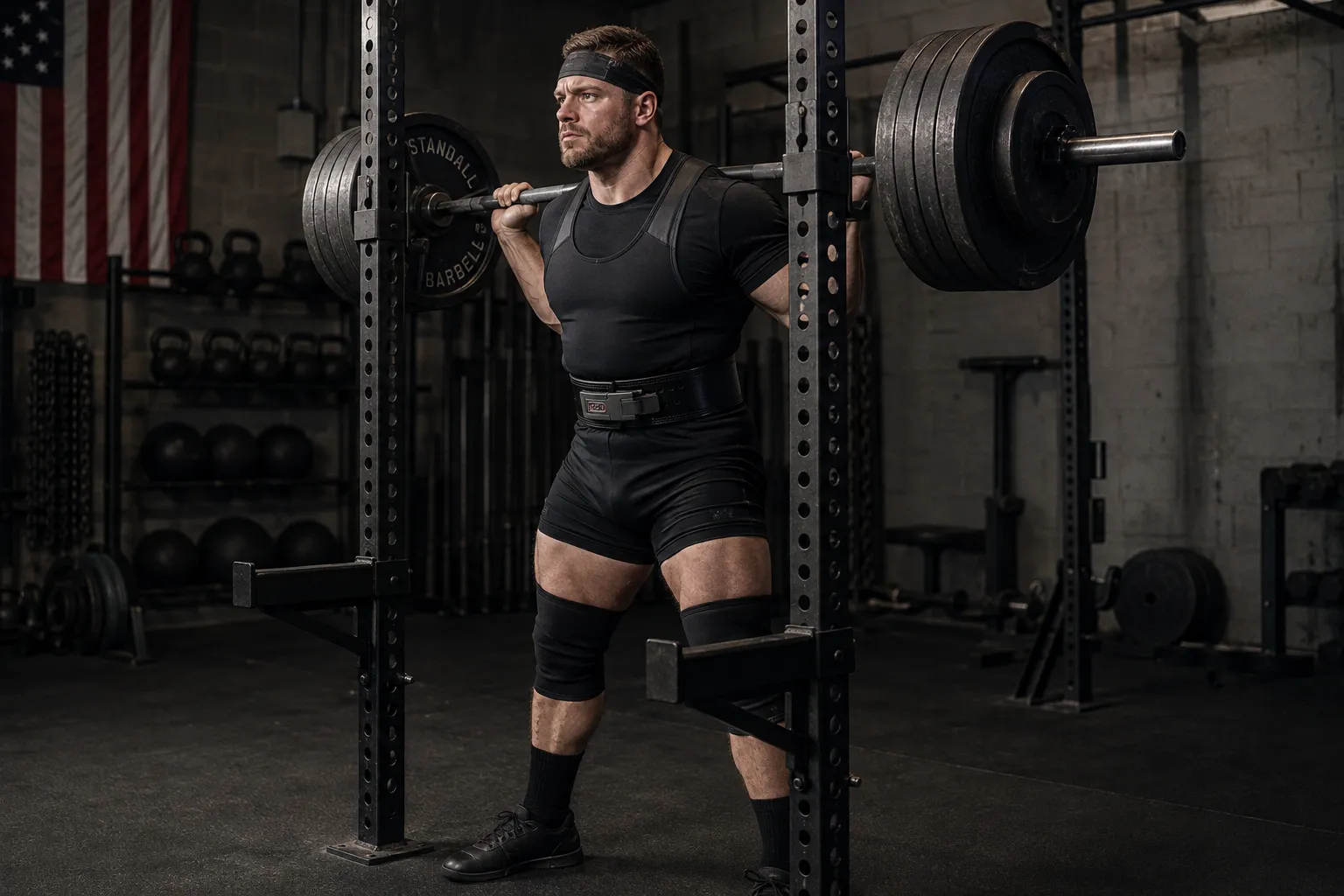
SBD's current 13mm Lever Belt is 13mm thick, 10cm wide, made from British cowhide, and uses the brand's adjustable gliding lever. It is also currently listed by SBD as IPF approved.
We have a separate SBD 13mm Lever Belt review covering that belt's fit, sizing, lever adjustment, and normal powerlifting use in more detail.
What matters for this comparison is that SBD also sells a 10mm version of essentially the same belt concept.
Same 10cm width. Same general lever system. Different thickness.
That makes the choice unusually clear: you are not deciding whether one looks more professional.
You are deciding how much rigidity you want around your torso.
Squats: 13mm has the clearest argument here
Heavy squats are probably where the thicker belt makes the easiest case for itself.
You take a breath, brace hard, unrack the bar, and want the belt to feel almost completely unchanged around the torso.
If you like that very solid wall to push against, 13mm can feel right.
But even here, 10mm should not be treated as a compromise belt.
Plenty of serious powerlifting belts are 10mm thick, and SBD sells its current 10mm model as an IPF-approved competition belt alongside the 13mm version.
So the question is not:
Can a 10mm belt handle heavy squats?
It can.
The better question is:
Do you prefer the extra rigidity of 13mm enough to accept the extra bulk?
That is a personal fit question, not a strength-level badge.
Deadlifts expose bad belt choices quickly
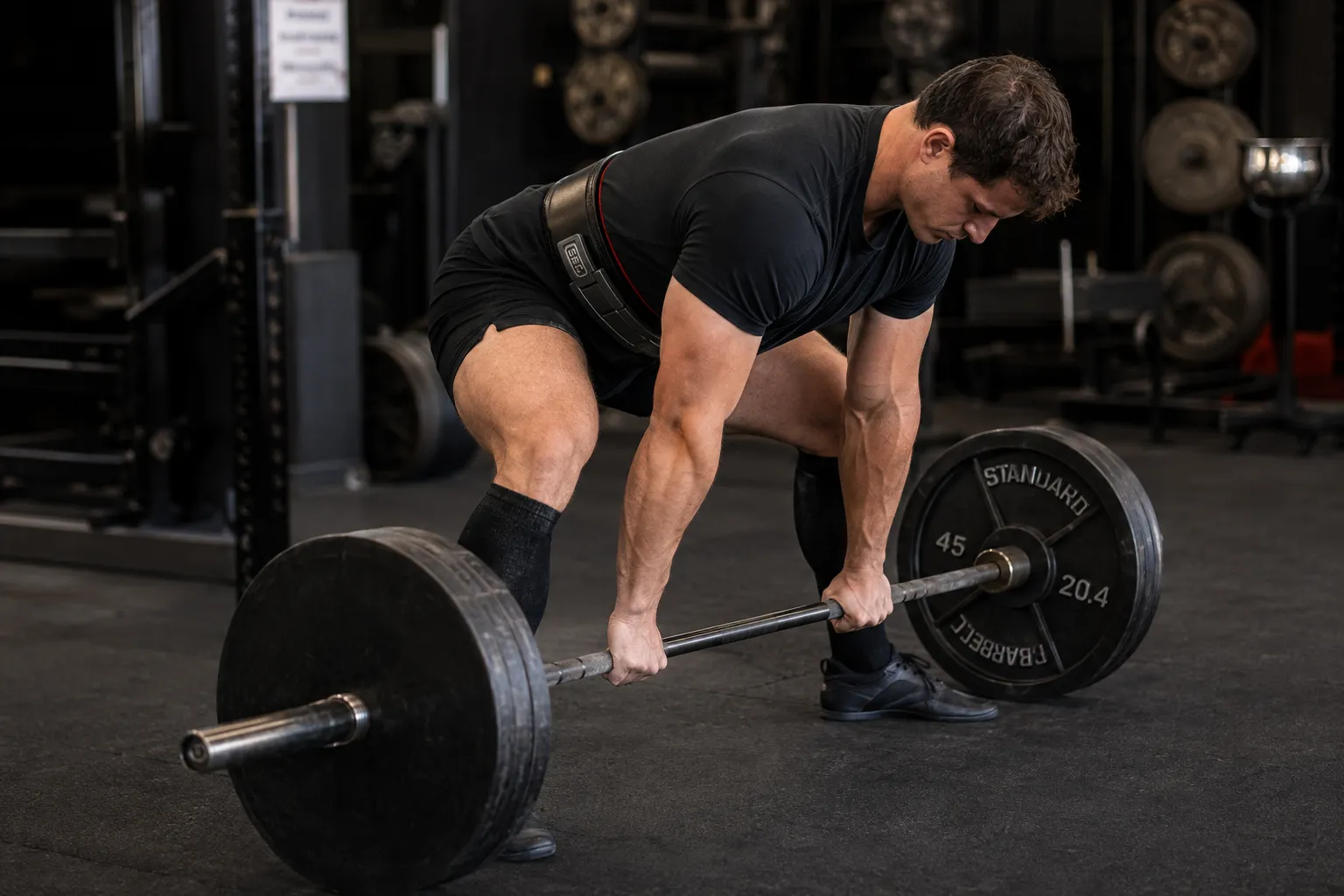
A belt that feels perfect while standing upright may feel completely different once you fold into a deadlift position.
This is especially noticeable if you have a shorter torso or wear the belt low.
A thick, wide belt can contact the ribs and hips sooner as you bend toward the bar.
That does not mean 13mm belts are bad for deadlifts. Many powerlifters use them very successfully.
It means torso shape and belt position matter more in the deadlift.
If a 4-inch belt already feels crowded between your ribs and hips, adding more rigidity may not solve anything.
Iron Bull's current belt guidance makes a similar distinction with width: it recommends considering a 3-inch belt for shorter torsos or lifters who find a 4-inch belt uncomfortable against the hips.
Thickness and width are different decisions, but the principle is the same:
your anatomy gets a vote.
Break-in is another reason not to buy 13mm casually
New leather powerlifting belts are supposed to be stiff.
A 13mm model just starts farther down that road.
Iron Bull's current lever-belt guide estimates roughly 2–4 weeks of regular use for a 10mm belt and 4–8 weeks for a 13mm belt to break in, while noting that both should initially feel stiff. Those numbers are manufacturer guidance rather than a universal rule — leather type, construction, frequency of use, and the lifter all matter.
The useful takeaway is not the exact number of weeks.
It is that you should expect the thicker belt to demand more patience.
Do not try to speed-run the process by aggressively folding, rolling, or abusing expensive leather until it becomes soft.
Train in it.
Let it gradually shape itself around the way you actually wear it.
More thickness does not fix poor bracing
A belt is something you brace into.
It is not a replacement for knowing how to create tension through your trunk.
If you tighten a 13mm belt until you can barely take a breath and then expect the leather to stabilize your entire lift for you, you are missing the point.
The belt should be snug enough to give you something firm to push against while still allowing you to take the breath you need for your setup.
SBD's sizing guidance recommends measuring where the belt will actually sit, normally around or just above the navel, with the abdominal muscles braced. It also explicitly warns against using pants size as a substitute for an actual belt measurement.
That matters just as much at 10mm as it does at 13mm.
Bigger lifter does not automatically mean thicker belt
Bodyweight alone is not a great way to choose thickness.
A heavyweight lifter may prefer 10mm because it conforms better to their training style.
A lighter competitive powerlifter may love an extremely rigid 13mm belt.
Torso length, how hard you brace, belt position, lift selection, and personal tolerance for stiffness all matter.
This is why recommendations like:
beginners = 10mm, advanced lifters = 13mm
are too simplistic.
Experience helps because an experienced lifter usually knows what they want from a belt.
But strength level itself does not magically make 13mm more appropriate.
What if this is your first real powerlifting belt?
I would normally start with 10mm.
Not because a beginner cannot use 13mm.
Because 10mm gives you more room to figure out:
- where you like wearing the belt;
- how tight you like it;
- whether you use the same position for squats and deadlifts;
- and whether a full 4-inch belt even works comfortably with your torso.
You can still squat and deadlift very heavy in a 10mm belt.
And if, after months of training, you decide you specifically want something stiffer, you will understand what the 13mm version is actually giving you.
That is a much better reason to upgrade than simply seeing the larger number.
Competition rules: both thicknesses can work
The current IPF Technical Rulebook allows belts up to 13mm thick and 10cm wide, so both a compliant 10mm belt and a compliant 13mm belt can fall within the dimensional limits.
But dimensions alone do not guarantee that a particular belt is allowed at a particular meet.
If you compete, check the exact manufacturer/model against the current approved list and the rules of your federation.
Do that before meet week.
Not while packing your gym bag the night before weigh-ins.
So which thickness should you buy?
Choose 10mm if you want a serious leather powerlifting belt but still care about some flexibility.
It is the option I would lean toward for:
- a first leather powerlifting belt;
- mixed strength training;
- lifters who use the belt for both squats and deadlifts;
- shorter or more sensitive torsos;
- anyone who dislikes equipment that takes a long time to feel natural.
Choose 13mm if you already know that maximum rigidity is something you value.
It makes the most sense for:
- squat-focused powerlifters;
- lifters who dislike belt flex;
- experienced belt users who know exactly where and how they wear their belt;
- people willing to trade comfort and easier break-in for a stiffer setup.
The phrase that matters there is trade.
Thirteen millimeters gives you more rigidity.
It also gives you more rigidity.
Whether that is an advantage depends entirely on whether you wanted it in the first place.
Bottom Line
For most lifters shopping for their first serious powerlifting belt, 10mm is the easier recommendation.
It is still thick enough to provide a firm surface for bracing, it works well for heavy squats and deadlifts, and it is generally easier to adapt to during normal training.
A 13mm belt becomes more appealing when you already know you prefer a very stiff setup and are willing to accept the extra bulk and break-in.
Neither thickness makes you stronger by itself.
And 13mm is not the professional version of 10mm.
They are simply two ways of balancing rigidity and usability.
Choose the one that fits the way you train, not the one with the bigger number.
FAQ
Is a 13mm powerlifting belt better than a 10mm belt?
Not automatically. A 13mm belt is more rigid, while a 10mm belt has a little more give and is usually easier to use across different lifts. The better choice depends on your preferred belt feel and training style.
Is 10mm thick enough for heavy squats?
Yes. Ten-millimeter belts are sold as serious powerlifting and competition belts by major strength brands, including SBD and Iron Bull.
Is 13mm the maximum IPF belt thickness?
Yes. The current IPF Technical Rulebook sets the maximum belt thickness at 13mm along the main length and the maximum width at 10cm.
Which is better for deadlifts, 10mm or 13mm?
Many lifters find 10mm easier to position because it has more give, but there is no universal answer. Torso length, belt width, belt position, and individual setup matter.
Should a beginner buy a 13mm belt?
They can, but 10mm is usually the more forgiving starting point. A 13mm belt makes more sense when the lifter already knows that they prefer a very rigid belt.
Sources for this article
- International Powerlifting Federation — Technical Rules — current belt construction and dimensional rules.
- SBD Apparel — 10mm Lever Belt — current thickness, width, construction and competition status.
- SBD Apparel — 13mm Lever Belt — current thickness, width, construction and competition status.
- SBD Apparel — Belt Size Guide — current guidance for waist measurement and choosing a usable adjustment range.
- Iron Bull Strength — 10mm vs 13mm Belt — manufacturer comparison of rigidity and intended training use.
- Iron Bull Strength — Lever Belt Guide — current guidance on thickness, width and break-in.
- Powerlifting-Gear.pro — SBD 13mm Lever Belt Review.
- Amazon — SBD 13mm Lever Belt.