First Powerlifting Meet Checklist: What to Bring, Wear & Expect
Your first powerlifting meet will probably feel strangely familiar right up until it doesn't.
You know how to squat. You know how to bench. You know how to deadlift. You've probably spent weeks thinking about openers, checking your belt, and telling yourself not to do anything stupid in the final training session.
Then meet day arrives and suddenly somebody wants your rack height, your opening attempts, your ID, and possibly your equipment before you've had enough coffee to remember your own bodyweight.
That part is normal.
A powerlifting meet isn't especially complicated once you've been through one. The first time, though, there are a lot of small things happening around the lifting. Knowing those pieces ahead of time makes the day considerably easier.
This guide is about those pieces: what to pack, what to wear, what happens at weigh-in, how warm-ups work, what happens when your name is called, and which first-meet mistakes are easy to avoid.
One important note: federations do not all use identical rules. If you're competing in an IPF-affiliated meet, the current IPF Technical Rulebook applies. If you're lifting in USAPL, Powerlifting America, WRPF, USPA, RPS, or another organization, check that federation's current rulebook and the meet director's instructions.
The meet director's email beats something you read three years ago on Reddit.
Table of Contents
A Few Days Before the Meet, Stop Shopping for Problems
The week of your first meet is not the time to discover that the singlet you ordered doesn't fit, your belt barely closes, or the knee sleeves you planned to use aren't allowed by your federation.
Lay everything out.
Actually put on the clothes and equipment you intend to compete in. Squat in the singlet. Put your belt on. Get the knee sleeves over your calves. Wrap your wrists. Wear the shoes you'll use.
It sounds obvious, but plenty of meet-day problems come from gear that was technically owned but never tested together.
A singlet that feels fine standing in front of a mirror can pull differently at the bottom of a squat. A belt position you like in sweatpants may feel different over a singlet. Very tight knee sleeves are much less charming when you're trying to get them on quickly in a crowded warm-up room.
If you're competing under IPF rules, this is also the point when you should verify any equipment that requires approval against the current IPF Approved List guide, not simply the brand's product page.
The approval cycle currently in use runs through December 31, 2026, and approval is tied to specific equipment, not the general idea that a company is an “IPF brand.”
Do that check at home.
Meet morning is a terrible time to research an IPF ID number on your phone.
Read the Meet Email Again
There is almost always useful information in the final email, registration page, athlete packet, or social post from the organizer.
Look for the venue address, parking instructions, check-in time, weigh-in time, flight or session assignment, equipment inspection instructions, spectator information, and whether anything needs to be submitted in advance.
Also find out when lifting actually begins.
Do not assume that “weigh-in at 7:00” means the first squat is at 7:30.
Under current IPF procedure, for example, weigh-in takes place no earlier than two hours before the start of the category and lasts up to 90 minutes. Other federations may run a different schedule.
If the meet director gives you a specific arrival time, use that rather than trying to reverse-engineer the day yourself.
Arriving absurdly early is inconvenient.
Arriving ten minutes after your weigh-in window closes is worse.
What Should You Wear?
For most raw powerlifting meets, the basic competition outfit is simple: a singlet, appropriate shirt where required, socks, and shoes, with whatever permitted supportive equipment you use.
The details are where federation rules matter.
If you're lifting under IPF Classic rules, the singlet, belt, knee sleeves and supportive wrist wraps have specific requirements. Knee wraps belong to Equipped competition, not Classic. Footwear has its own technical rules rather than working exactly like approved belts or knee sleeves.
Deadlift socks deserve their own reminder because they're incredibly easy to forget.
If your federation requires long socks for the deadlift, put a pair in your meet bag and put another pair in there too.
Socks take up almost no space. There is no prize for bringing exactly one pair.
The same goes for underwear and your competition T-shirt. Bring a spare if you have one that complies with your federation's rules.
Meet venues are not always comfortable. Shirts get sweaty. Drinks get spilled. Somebody sits on something they shouldn't.
A backup can save a ridiculous amount of stress.
Don't Cut Weight Like You're Trying to Make a Documentary
For a first meet, making the lightest possible weight class should rarely be the main event.
If you're comfortably inside your class, great.
If you're slightly over and have a sensible plan that you've used before, that's a separate decision.
But your first competition is a bad place to experiment with aggressive dehydration because somebody online said they dropped eight pounds overnight.
You are not just trying to make the scale.
You still have to squat afterward.
For many first-time lifters, competing near normal bodyweight means one less thing to manage and gives you a much better chance of actually enjoying the day.
What Happens at Weigh-In?
Weigh-in is usually much less dramatic than people imagine.
Bring photo identification if your federation or meet requires it. Under current IPF rules, lifters must identify themselves with an ID or passport.
You will be weighed according to the federation's procedure, and this is also where several pieces of meet administration may happen.
For an IPF meet, the lifter or coach declares opening attempts for all three lifts at weigh-in. The lot number helps determine order when lifters request the same weight.
This is why your openers should not exist only as a vague conversation with your coach.
Write them down.
And remember that the numbers on the competition platform are usually handled in kilograms. If most of your training is logged in pounds, know your intended kilo attempts before you arrive.
“About 315” is not a competition attempt.
140 kg is.
Pick Boring Openers
Your opener has one job.
Get you into the meet.
It is not there to impress the room. It is not there to prove your training cycle worked. It is not the lift you use to make up for a disappointing final week.
A good opener should be a weight you expect to make even if the warm-up room is crowded, the bar feels different, you slept badly, and you're more nervous than expected.
For many lifters, that means something around a confident training triple or a weight they could handle comfortably on a mediocre day. The exact percentage is less important than the idea.
You want to hear the commands, get white lights, and then build.
Going nine-for-nine isn't mandatory.
But bombing out because you chose an opener that required perfect conditions is a very avoidable way to end a first meet.
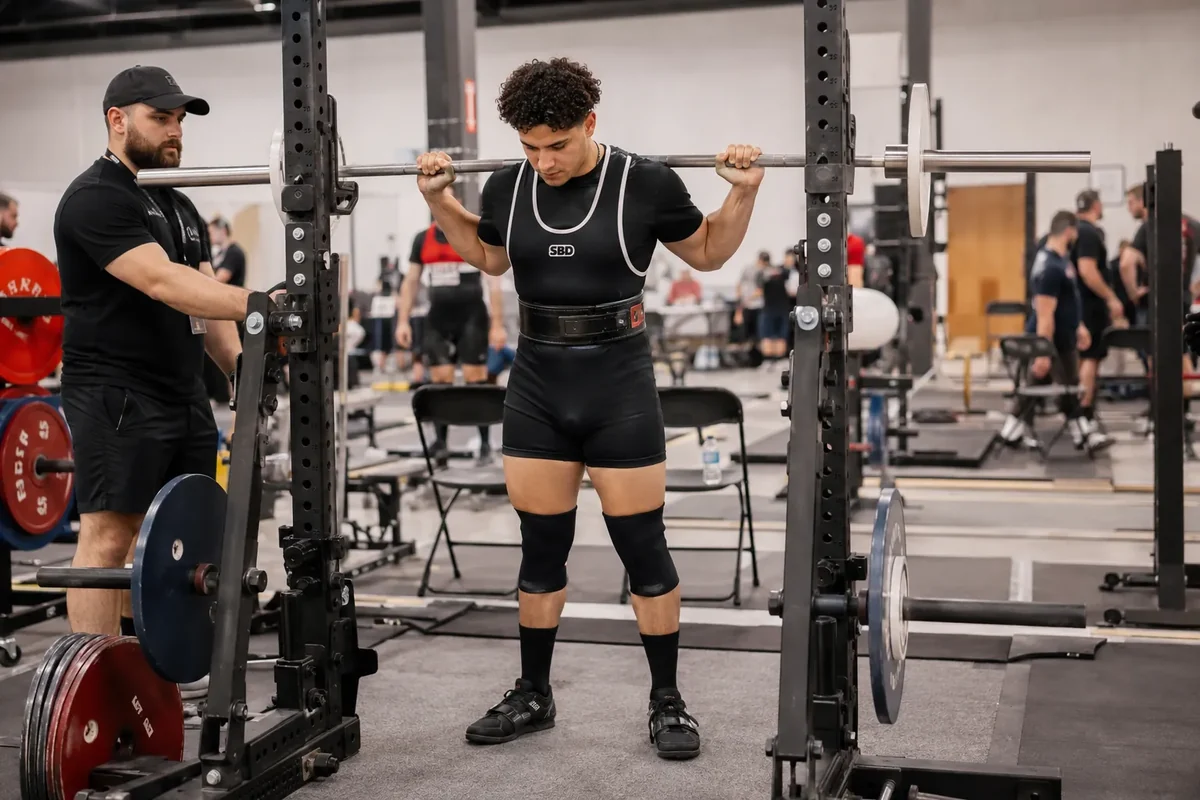
Find Your Rack Heights Before You Need Them
The competition rack probably isn't the rack in your gym.
Before lifting begins, find the squat and bench setup and establish your rack heights according to the meet procedure.
Under current IPF rules, lifters should check squat and bench rack heights before the competition starts, and the rack height sheet is signed or initialed by the lifter or coach.
Take this seriously.
When you're called to the platform, that isn't the moment to decide the squat hooks are two positions too high.
Once the bar is announced ready, the competition clock is moving.
If you're unsure about the height, test it.
Unrack an empty bar if the organizers allow it. Set your hands. See where the bench uprights land relative to your normal setup.
A rack height that is slightly wrong can turn an otherwise easy attempt into an awkward one.
The Warm-Up Room Is Controlled Chaos
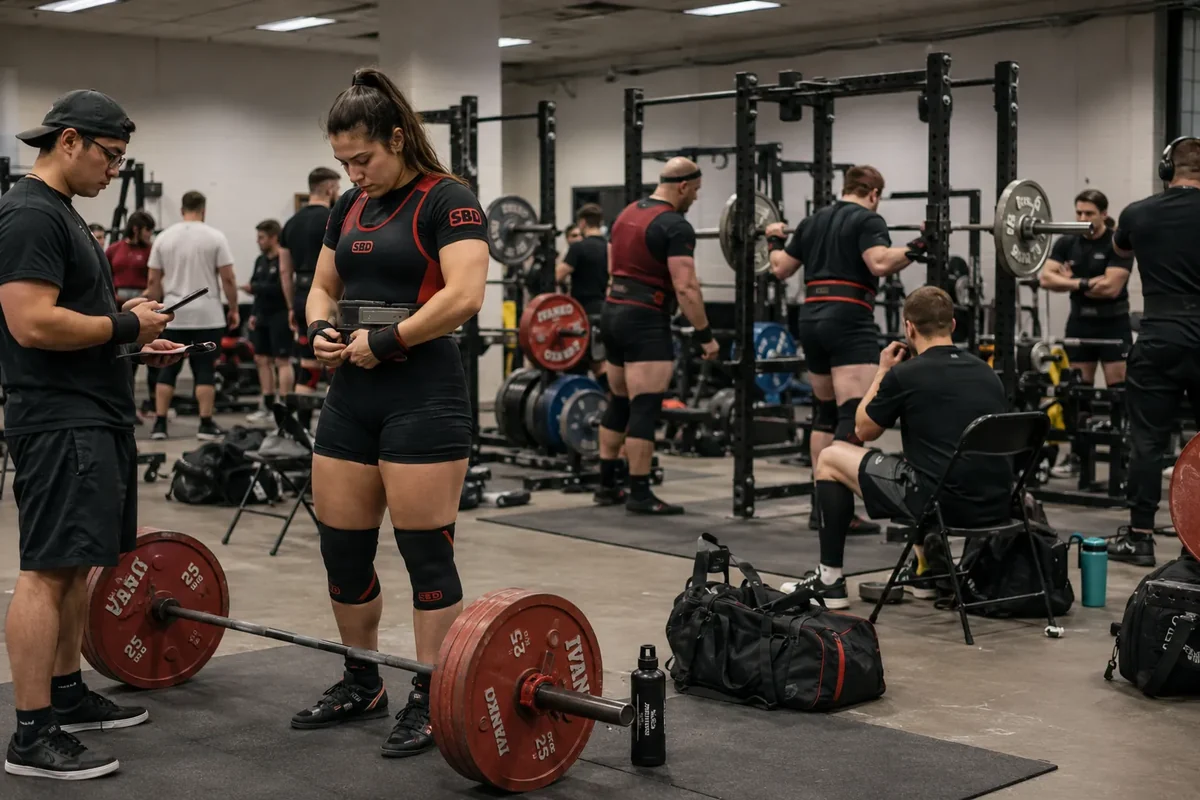
Your home gym may have six racks and twenty people doing unrelated workouts.
The meet warm-up room may have two racks and fifteen people who all need to squat at nearly the same time.
Don't wait for someone to organize your warm-ups for you.
Pay attention to your flight, estimate when your group will begin, and work backward. If you have a coach or handler, this becomes much easier because they can watch the platform while you focus on lifting.
If you don't have a handler, talk to the other lifters sharing the rack.
People usually work together.
“I'm taking 120 next. What are you at?”
That solves more problems than silently hovering near the plates.
Try not to make tiny jumps that require changing the bar every thirty seconds. Group warm-ups where possible, and remember that nobody needs their exact home-gym ritual to have a good meet.
One missing warm-up set will not erase your strength.
Rushing six sets into eight minutes might.
Learn the Commands Before Meet Day
A technically strong gym lift can still earn red lights if you do not follow competition commands.
This is especially common with first-time bench press attempts.
Practice commands in training before the meet until waiting for them feels normal.
On squat, you need to establish the required position and wait for the referee's start command before descending. After standing the lift back up, you wait for the rack command rather than walking forward as soon as you feel finished.
On bench, there are multiple commands to pay attention to. Do not lower the bar before the start command, and do not rack it just because you've locked it out.
On deadlift, there is no start command in the same sense, but you must finish the lift and wait for the down command before returning the bar.
The exact wording and standards depend on federation.
Read your rulebook and practice the rules you will actually compete under.
Your training partner yelling random commands while scrolling Instagram is still better than seeing competition commands for the first time on attempt one.
When Your Name Is Called, You Have Less Time Than It Feels Like
Meet day contains a lot of waiting followed by very short periods where you suddenly need to do something.
Know who is ahead of you.
Most competitions display or announce who is lifting, who is next, and who is a few lifters out. Start getting ready before your name is the one on the bar.
Under current IPF rules, once the bar is announced ready and the lifter is called, the athlete normally has one minute to begin the attempt.
A minute is plenty when your belt is already on and you're standing near the platform.
It is surprisingly short when you're still sitting on a chair trying to pull up a knee sleeve.
Stay aware of the order.
You don't need to pace behind the platform for ten minutes, but you also shouldn't disappear to the bathroom when you're three out.
After the Lift, Don't Forget the Next Attempt
You finish your opener.
Three white lights.
You feel fantastic.
You hug somebody, start watching the replay, and forget that the officials need your second attempt.
This is another reason a handler is useful.
Under IPF rules, the next attempt must normally be submitted within one minute after the previous attempt, starting when the lights are activated.
Other federations may have their own timing, but the lesson is the same: know the procedure before the meet.
Decide your likely second attempt in advance, then adjust based on how the opener moved.
Do the same for your third.
Your meet should not be nine completely separate decisions invented from scratch.
What Food Should You Bring?
Bring food you already know sits well.
A powerlifting meet can last most of the day, but that does not mean you need a grocery cart full of sports nutrition.
Simple foods are usually easier: things you can eat in small amounts between lifts without feeling like you're digesting Thanksgiving dinner during bench warm-ups.
Think familiar carbohydrates, some protein, fluids, and sodium according to what you normally tolerate.
Fruit, rice-based foods, sandwiches, pretzels, sports drinks, cereal bars, or whatever has worked during long training sessions can all make sense.
The exact menu matters less than not introducing surprises.
If you've never consumed 500 milligrams of caffeine in one shot, meet day is not the ideal clinical trial.
Bring water.
Bring more than you think you'll need if the venue allows outside drinks.
And if you weighed in lighter or altered food and fluid intake before the meet, have a plan to eat and drink after weigh-in rather than wandering around deciding what sounds good.
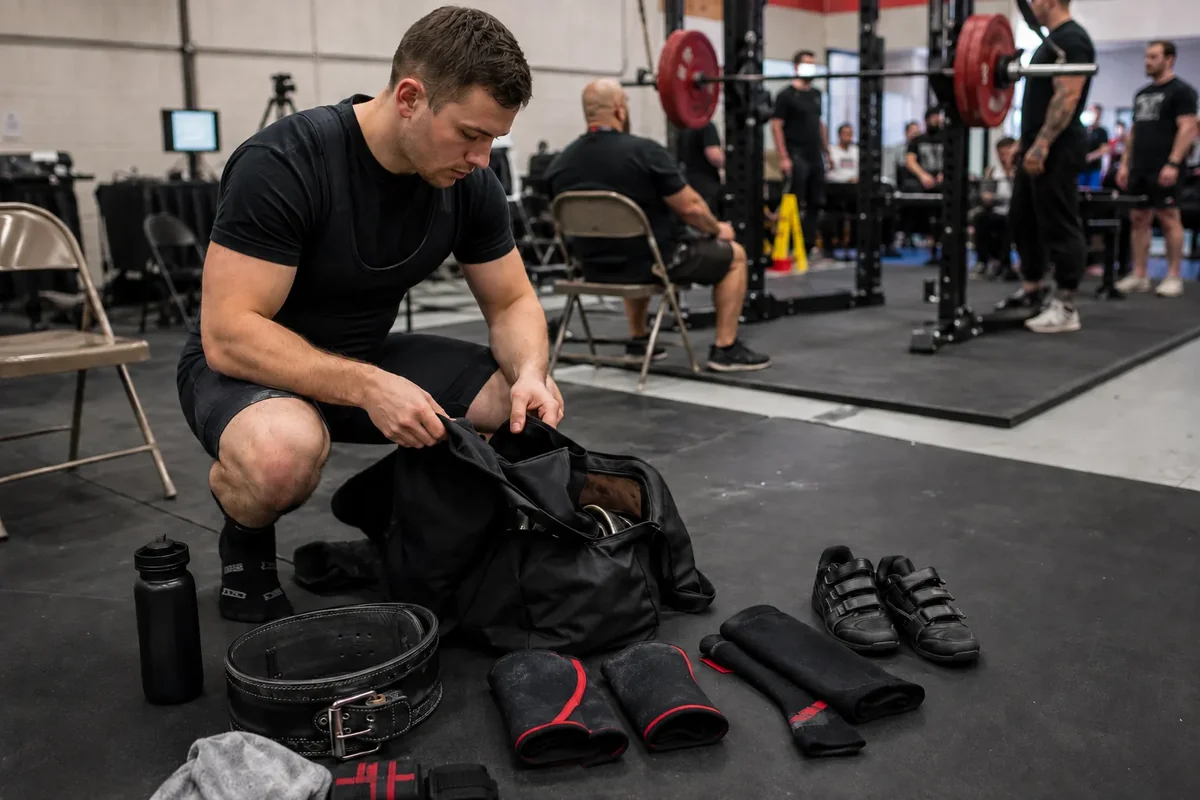
What Belongs in the Meet Bag?
Your competition bag should cover three categories: things required to lift, things that make the day easier, and backups for small failures.
You do not need to bring your entire gym locker.
You do want the items that would be difficult to replace five minutes before your flight begins.
- Photo ID and any federation membership information you need
- Singlet
- Competition T-shirt
- Approved belt if you use one
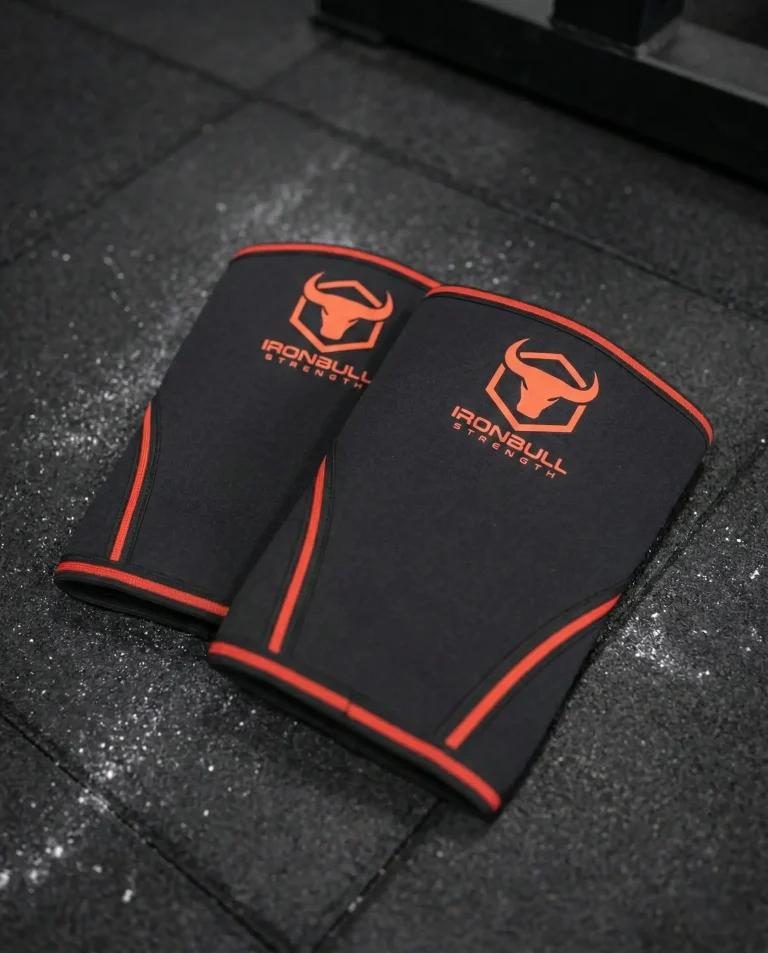
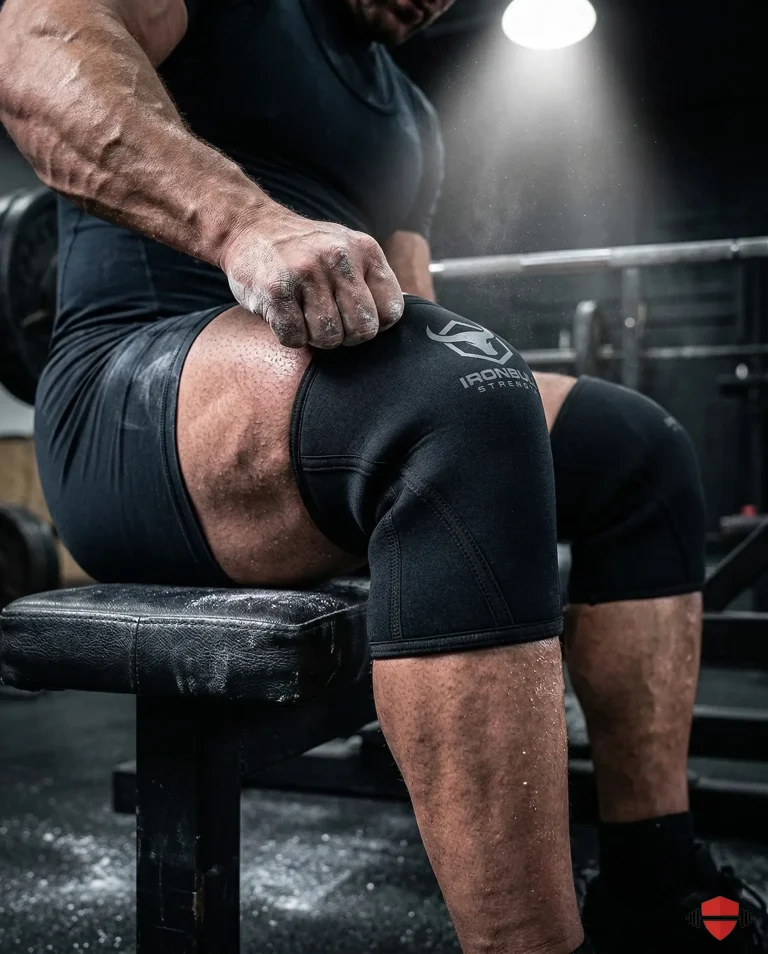
- Knee sleeves or other permitted knee equipment
- Wrist wraps if you use them
- Squat/bench shoes and deadlift footwear
- Deadlift socks
- Spare socks, underwear and shirt
- Food you already tolerate well
- Water and normal hydration drinks
- Any regular personal items you normally need during training
- Small towel
- Phone charger or power bank
- Written opening attempts
- Your rack heights once you've established them
- A copy or saved link to your federation's current rulebook
- Hoodie or other warm clothing for long breaks
- A simple backup plan if one piece of gear becomes unusable
You may also want chalk, but check the meet's policy first. Many competitions provide it at the platform or warm-up area, and federations can regulate what substances are permitted.
Do You Need a Handler?
No.
But a good handler can make a first meet much easier.
The handler is not there to give a motivational speech before every lift.
The useful stuff is less glamorous.
They watch the flight order. They tell you when to start warming up. They submit attempts. They help with knee sleeves or wraps if appropriate. They know when the bar is nearly ready. They stop you from turning a smooth opener into a reckless second attempt because you suddenly feel invincible.
If you have an experienced coach, great.
If you don't, a calm training partner who understands the meet format can still be useful.
The worst handler is somebody who is just as confused as you are but louder about it.
If you're lifting alone, that's fine too. You simply need to pay more attention to the scoreboard, speaker, attempt submission and warm-up timing.
Expect the Day to Feel Slow — Until It Doesn't
A first meet has a strange rhythm.
You wait.
Then suddenly you have to squat.
Then you wait again.
Bench moves faster than expected.
Then there is another break.
By deadlifts, you may have been in the building for hours.
Keep yourself reasonably warm between lifts, eat gradually, and don't spend every break standing around the warm-up room because you feel like you should be doing something.
You are allowed to sit down.
You are allowed to relax.
You are not going to lose your squat strength because you sat in a folding chair for twenty minutes.
You Will See Red Lights
Possibly on your own lifts.
That's fine.
The useful question is why.
Maybe depth was short. Maybe you missed a command. Maybe your bench paused differently under a competition referee than it does in your gym. Maybe the weight simply wasn't there.
Look at the lights, listen to your coach if you have one, and get the information you need for the next attempt.
Do not spend the next twenty minutes trying to prove to everyone around you that the referees were wrong.
One failed attempt does not ruin the meet.
Repeating the exact same mistake because you're angry about the first one can.
Don't Chase Somebody Else's Meet
This becomes especially tempting in the deadlift.
You look at the scoreboard.
Somebody in your class is close.
A podium place appears possible.
Your planned third attempt was 200 kg, but now 215 kg would move you ahead of somebody.
There are situations where changing the plan makes sense.
Your first powerlifting meet usually isn't the time to turn every attempt into championship strategy unless you and your coach deliberately want to compete that way.
A successful total gives you something real to build from.
You'll leave knowing what competition squats feel like, how your bench responds to commands, how warm-ups went, and whether your attempt selection was too conservative or too aggressive.
That information is valuable.
You don't need to turn meet one into the final scene of a sports movie.
The Goal of Your First Meet Is Bigger Than Your Total
Of course the total matters.
You trained for it.
But your first meet is also where you learn all the things that are almost impossible to understand from a rulebook.
How early you like to warm up.
Whether you prefer eating after squats or waiting.
How tight you really want your knee sleeves after six hours in a venue.
Whether your third squat affects your bench more than expected.
How your deadlift feels after a full competition day instead of a normal training session.
Those lessons make meet number two much easier.
If you finish your first competition with a total, a clearer idea of how the day works, and a list of two or three things you'd handle differently next time, the meet did its job.
Before You Leave Home
Check your federation's current rules one last time.
Check the meet address.
Check your weigh-in time.
Make sure the singlet is actually in the bag rather than hanging on the back of a chair.
Pack the deadlift socks.
Know your openers in kilograms if the meet uses kilos.
And leave yourself enough time that one wrong turn or slow parking lot doesn't become part of your warm-up.
Once you're there, the job gets much simpler.
Listen for your name.
Follow the commands.
Take the lifts one at a time.
You've already done the hard part in training.