SBD Knee Sleeves Review (2026): Why They Are Still the Gold Standard
After a decade of dominance, market saturation, and a flood of cheaper alternatives — do SBD knee sleeves still justify the premium in 2026? A veteran coach’s honest verdict.
The Unshakable Reign — And the Question That Needs Answering
SBD Apparel launched their knee sleeves in 2013. By 2016, they were on the knees of world champions. By 2020, they were the default choice at every serious competition. By 2026, they have outlasted three full waves of competitors who were going to dethrone them.
Here is what I have watched happen in this market over thirteen years of coaching: a brand releases a well-marketed sleeve at half the SBD price. Forums go wild. Athletes trial it. Six months later, the same athletes are quietly back in SBDs.
But the market in 2026 is genuinely more competitive than it has ever been. Stoic has refined their product. Inzer’s ErgoPro has a legitimate following. A dozen Chinese-manufactured 7mm sleeves have flooded Amazon with convincing spec sheets.
So the question deserves a direct answer this year:
Is the SBD price premium still justified — or are you just paying for the red stitching?
Short answer: yes, with caveats. Long answer: everything below.
🏋️ COACH’S TIP: I have coached athletes at national and international level for over a decade. I have no financial relationship with SBD. I have also coached athletes who have done very well in non-SBD sleeves. What follows is an assessment based on platform performance, not brand loyalty.
Specifications & The SBD Feel
Numbers on a spec sheet tell you almost nothing about how a knee sleeve actually performs. Here is what the numbers mean when they translate to your body under load.
The Neoprene: Not All 7mm Is Equal
Every brand that competes with SBD lists “7mm neoprene” on their product page. This is technically accurate. It is also misleading, because neoprene density and cell structure vary enormously across manufacturers.
SBD sources a high-density, closed-cell neoprene that maintains structural integrity under sustained compression load. This matters enormously. Cheaper neoprene — even at 7mm — compresses and loses effective thickness under the forces generated in a heavy squat. SBD neoprene does not. It resists collapse and maintains its compression profile from the first rep of the warm-up through a third-attempt squat.
📋 SPEC NOTE: Technical detail for those who want it: SBD’s neoprene has a Shore A hardness rating that sits above the industry average for 7mm competition sleeves. This is why SBD sleeves feel harder initially but maintain their feel over years of use, while softer-compound alternatives feel comfortable immediately but lose compression capacity within 12–18 months of heavy training.
The Torque Design: The Real Differentiator
This is what separates SBD from every straight-cut sleeve on the market, including most of the clones. The SBD sleeve uses a patented spiral construction — the neoprene panels are cut and assembled at a slight helix angle relative to the leg axis.
What this creates in practice: as you descend into a squat, the sleeve does not simply compress or restrict. The spiral geometry allows the sleeve to track the natural rotation of the tibia and femur through the squat movement pattern. You get consistent, uniform compression through the entire range of motion — not a sleeve that grips at parallel and releases at depth.
Straight-cut sleeves — including several popular alternatives — cannot replicate this. The geometry does not allow it. You can copy the neoprene density. You cannot copy the construction patent.
IPF Approval: Non-Negotiable for Competitors
SBD knee sleeves appear on the current IPF Approved Equipment List for the 2023–2026 cycle. For any athlete competing in IPF-affiliated national or international competition, this is not a nice-to-have — it is a requirement.
Stoic sleeves are not IPF approved. Several popular Amazon alternatives are not IPF approved. An athlete who trains in non-approved sleeves and then attempts to use them at an IPF-affiliated meet will be turned away at equipment check. SBD’s IPF status removes this risk entirely.
RELATED: Need to know if your squat is competitive? Use our Wilks & IPF GL Points Calculator (2026)!
🏋️ COACH’S TIP: The IPF approval cycle renews every few years. Always confirm your specific SBD sleeve model appears on the current approved list at powerlifting.sport before a major meet. SBD consistently renews their approvals, but verifying is a 60-second step that removes all competition-day doubt.
Performance on the Platform
Compression: What It Is Actually Doing
Compression in a knee sleeve serves two distinct physiological functions — and both matter for powerlifting performance.
Proprioception: The compression signal to the skin and mechanoreceptors around the joint improves your brain’s real-time awareness of knee position and tracking. This is not placebo — it is well-documented in the sports medicine literature. Athletes in compression sleeves demonstrate measurably improved joint position sense compared to unsupported controls.
Thermoregulation: Neoprene traps heat. Consistent joint temperature — particularly in the synovial capsule — reduces viscosity of synovial fluid and improves joint lubrication. Put simply: warm knees move better than cold knees, and they do so more safely.
SBD’s density advantage means the compression is consistent from rep one through the end of a heavy session. Softer-compound sleeves can provide adequate compression for the first few sets then gradually soften as the neoprene heats and compresses — a degradation effect that SBD’s material resists.
The ‘Pop’ — Honest Assessment
This gets discussed heavily online, often inaccurately. Let me be clear about what SBD knee sleeves do and do not do.
They do not magically add kilograms to your squat. Anyone claiming a specific weight benefit from sleeves alone is conflating several variables.
What they do provide:
- A slight elastic rebound as you rise out of the hole — a very modest mechanical assist that is consistent and predictable
- Proprioceptive confidence — athletes who feel their knee tracking correctly under load move more efficiently through the lift
- Consistent warmth through the session — a warm, well-lubricated joint transmits force more cleanly
The total performance effect is real but modest — and the psychological component is not trivial. An athlete who trusts their equipment moves differently than one who does not. Platform confidence is a legitimate performance variable.
🏋️ COACH’S TIP: If an athlete comes to me saying their sleeves add 15–20kg to their squat, I correct that framing. The sleeves are providing proprioceptive feedback and consistent warmth. Your squat improves because you move better, not because the sleeve is doing the work. Understanding the actual mechanism helps athletes use the equipment correctly rather than becoming over-dependent on it.
Warmth and Joint Safety
For any athlete with prior knee injury history, the thermal retention of SBD’s high-density neoprene is a genuine protective factor. The sleeve retains heat significantly longer between sets than thinner or lower-density alternatives.
In cold training environments — commercial gyms in winter, outdoor platforms, unheated training halls — this difference between maintaining a warm joint through a 5-minute rest period versus a cold one can be clinically meaningful.
Durability: The Long Game
This is where the economics of SBD sleeves make their strongest argument.
Long-Term Test Result: Athletes in my training environment who have used SBD knee sleeves with consistent 4–5 day per week heavy training have reported functional sleeves at the 3-year mark. Two athletes at the 4-year mark. One athlete — a national-level lifter who trains daily — has a pair approaching 5 years with consistent compression still intact.
Compare that to the typical lifecycle of a budget 7mm sleeve from Amazon:
- Months 1–3: Adequate compression, functional performance
- Months 4–8: Compression loss begins, particularly at the top and bottom edges
- Months 9–14: Noticeable degradation in stiffness and rebound — still wearable, not competition-grade
- Months 15+: Structural failure at stitching or neoprene delamination
At SBD’s price point versus a budget sleeve replaced annually, the economics equalise within two years and favour SBD significantly from year three onwards.
Stitching Quality: The Technical Comparison
SBD uses a quad-stitch reinforced seam construction with industrial-grade thread. The critical areas — top and bottom cuff edges, where stress concentration is highest during application and removal — are additionally reinforced compared to their competition-grade specification.
Budget Amazon alternatives, even those with convincing marketing photography, use single or double-stitch construction with standard nylon thread. Under repeated heavy stretching during application and the compression cycles of heavy training, these seams show fatigue. Fraying at the cuff edge is the most common failure mode, and it typically begins to appear within six months of intensive use.
🏋️ COACH’S TIP: The fastest way to destroy any knee sleeve — SBD or otherwise — is to pull it on by gripping only the cuff edge with wet or chalked hands. Always grip the body of the sleeve. For SBD specifically, the rubber texture grip zones on the outside give you purchase without stressing the seams.
Sizing: The Critical Section
More athletes size incorrectly on SBD sleeves than on any other brand I have seen. The reason is that SBD’s sizing system is more precise than most — and that precision punishes guesswork.
Standard Fit vs. Competition Fit
SBD offers two distinct fit specifications. Understanding the difference is not optional — it directly affects both performance and safety.
- Standard Fit: Sized to your actual knee circumference measurement. Provides training-level compression — enough for proprioceptive benefit and warmth without the aggressive restriction of Competition Fit. Recommended for athletes who train 4–5 days per week and need to wear the sleeve for extended periods.
- Competition Fit: One size smaller than your Standard measurement. Significantly higher compression. Designed for maximal rebound assistance and proprioceptive feedback during competition. Should not be worn for extended periods or during high-rep work — fatigue in the compression environment is real.
📋 SPEC NOTE: How to choose: If you train in them daily, start with Standard Fit. If you are purchasing specifically for competition use and have already used a Standard Fit SBD, consider Competition Fit. Do not begin with Competition Fit as your first pair — the break-in and application difficulty will lead to poor technique and potential injury.
SBD Sizing Chart
| Size | Knee Circ. (cm) | Fit Type | Notes |
| XS | 30–33 cm | Standard & Comp | Slim build; confirm mid-thigh clearance |
| S | 33–36 cm | Standard & Comp | Most common female competitive size |
| M | 36–39 cm | Standard & Comp | Most common male competitive size |
| L | 39–42 cm | Standard & Comp | Larger knee; avoid sizing up for ‘comfort’ |
| XL | 42–46 cm | Standard & Comp | Check calf clearance — widest point test |
| XXL | 46–50 cm | Standard only | Competition Fit unavailable at this size |
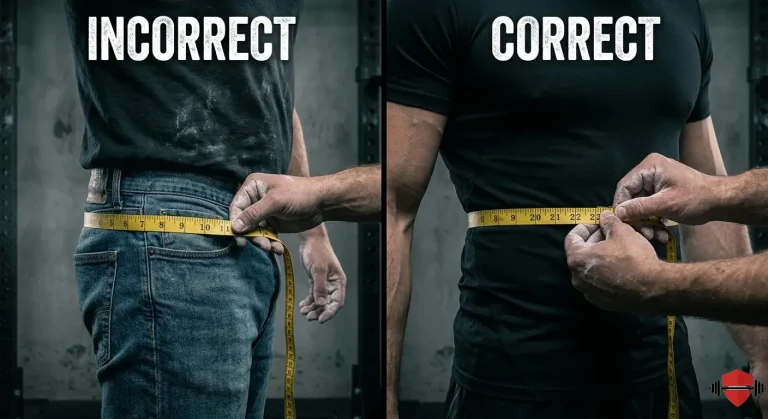
Measure your knee circumference at the mid-patella (centre of the kneecap) in centimetres. Measure three times and average. This is your working measurement.
The Sizing Trap — Read This Before You Order
The most common mistake is aggressive sizing down in search of more pop. I see this every competition season. Athletes read forum posts claiming that sizing down two sizes generates dramatic carry-over to their total. They order accordingly.
What actually happens:
- Application becomes nearly impossible without the plastic bag method — and attempted forced application tears the cuff seam
- Blood flow restriction at sustained compression levels causes knee discomfort mid-set, not performance enhancement
- Sleeves that are too small migrate during a lift — sliding upward when they should be over the patella
⚠️ WARNING: Do NOT size down more than one size from your Standard measurement for Competition Fit. Going two sizes below is not ‘more pop’ — it is a damaged sleeve, a restricted joint, and a wasted premium purchase. One size down is the maximum aggressive sizing for any athlete.
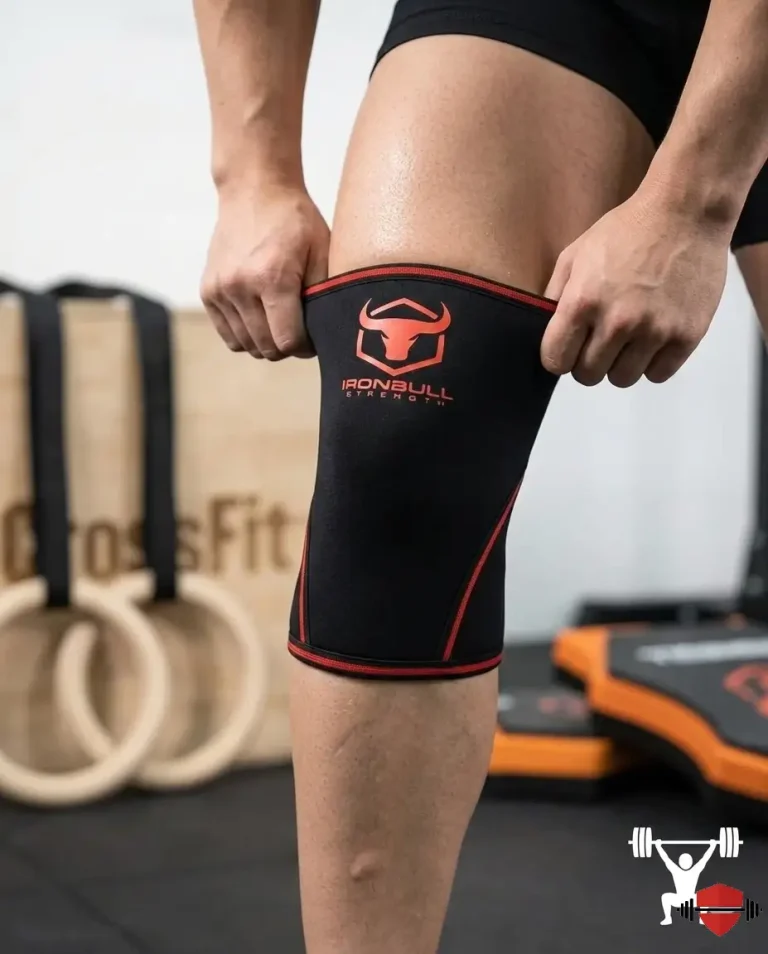
🔗 RELATED GUIDE: Struggling to get your new SBDs on? Even correctly sized SBD sleeves require technique. See our full application guide: 3 Proven Methods to Put On Tight Knee Sleeves (With & Without Bags) — covering the Standard Fold, Double Fold, and the Plastic Bag Trick.
SBD vs. The 2026 Contenders
The competitive landscape is more honest in 2026 than it was five years ago. Several brands have improved meaningfully. Here is where things actually stand.
| Feature | SBD 7mm | Stoic 7mm | Inzer ErgoPro 7mm |
| Neoprene Grade | High-density 7mm | Standard 7mm | Competition-grade 7mm |
| Spiral/Torque Cut | Yes — patented design | No — straight cut | Yes — aggressive cut |
| IPF Approved | Yes (2023–2026) | No | Yes (select models) |
| Break-in Period | 3–5 sessions | 1–2 sessions | 8–12 sessions |
| Stiffness Level | Firm (balanced) | Soft (comfort-first) | Very rigid |
| Rebound / Pop | Moderate — consistent | Low | High — can feel restrictive |
| Stitching | Quad-stitch reinforced | Double-stitch | Triple-stitch |
| Longevity | 3–5+ years heavy use | 1–3 years | 3–5 years |
| Price Category | $$$ (Premium) | $ (Budget) | $$ (Mid) |
| Available Sizes | XS–XXL (+ half sizes) | S–XXL | S–XL |
| Best For | Competitive + serious | Comfort, daily training | Max rigidity, equipped |
Stoic: The Comfort Alternative
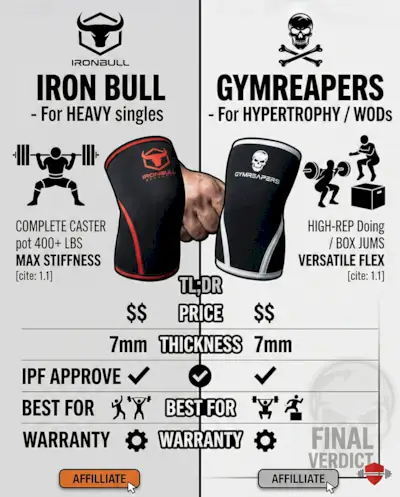
Stoic has built a legitimate following by going in the opposite direction from SBD. Softer compound, straight cut, extremely comfortable out of the box. If you are a recreational lifter who needs a sleeve for daily training and has no competition aspirations, Stoic is a rational choice at its price.
Where Stoic falls short: Not IPF approved. The softer compound loses compression capacity faster under heavy use. The straight cut means compression is less uniform through the squat ROM, particularly at depth. And for athletes who train seriously long-term, the replacement cycle erodes the initial price advantage.
Inzer ErgoPro: The Rigid Monster
Inzer’s ErgoPro is the sleeve for athletes who want maximum stiffness above everything else. The rigid construction and aggressive cut produce a significant mechanical rebound. For equipped-style training or athletes who specifically want maximal sleeve assistance, ErgoPro is worth evaluating.
The trade-off: The rigidity that provides the rebound also restricts natural knee tracking in ways that can create discomfort over a long training session. Break-in is significantly longer than SBD. And while select ErgoPro models hold IPF approval, availability varies by region and approval cycle — always verify before competition.
Bottom line on the landscape: SBD occupies a specific position that neither Stoic nor Inzer covers — the balanced intersection of stiffness, movement quality, IPF compliance, and durability. If you want maximum comfort, Stoic. If you want maximum rigidity, Inzer. If you want the best all-round competition sleeve, SBD is still the answer.
Pros & Cons: The Unfiltered List
Pros
- High-density neoprene that maintains compression integrity over years of heavy use — not months
- Patented spiral torque construction provides tracking-consistent compression through full squat ROM
- IPF approved for the 2023–2026 cycle — competition-ready without equipment check anxiety
- Quad-stitch reinforced seam construction demonstrably outlasts double-stitch alternatives
- Proprioceptive confidence at maximal effort — the sleeve feels the same on a warm-up as on a third attempt
- Half-size availability for athletes between standard sizes — a detail no competitor offers
- 3–5+ year documented lifespan under intensive use — the economics strongly favour SBD over time
- Global brand support — replacement and customer service available in every major lifting market
Cons
- Price — the highest in the category, and the barrier is real for athletes new to the sport
- Break-in period of 3–5 sessions — not brutal, but not comfortable on day one
- Application technique required — a correctly sized pair requires deliberate method to put on; application errors damage the seam
- Not the maximum stiffness option — athletes who specifically want an Inzer-level rigid feel will find SBD balanced, not extreme
- Sizing precision required — the system rewards athletes who measure correctly and punishes those who guess
- Competition Fit is not suitable for high-rep or extended-wear training — a separate Standard pair is advisable for serious competitors
Performance Ratings
Neoprene Quality ★★★★★ 5/5
Compression Consistency ★★★★★ 5/5
Rebound / Pop ★★★★☆ 4/5
Break-in Comfort ★★★★☆ 4/5
Durability ★★★★★ 5/5
IPF Compliance ★★★★★ 5/5
Value (Long-term) ★★★★★ 5/5
Value (Short-term) ★★★☆☆ 3/5
Sizing System ★★★★☆ 4/5
Overall ★★★★★ 5/5
Verdict: Is the Premium Still Worth It in 2026?
Yes. But the reason matters.
It is not worth it because SBD is a prestige brand. It is not worth it because elite athletes wear them. It is worth it because in 2026, after reviewing every serious challenger, no sleeve combines IPF compliance, high-density neoprene construction, spiral torque geometry, and documented multi-year durability in the same product at any price.
Buy SBD If You Are:
- A competitive powerlifter at any level who competes in IPF-affiliated meets — this is a non-negotiable recommendation
- A serious gym athlete who trains 4+ days per week with heavy compound movements and wants equipment that outlasts your training cycles
- An athlete with prior knee injury history who needs consistent proprioceptive input and thermal retention
- An athlete willing to invest in equipment once and not revisit the decision for several years
Consider Alternatives If You Are:
- A recreational lifter training 1–2 days per week with no competition interest — Stoic is a rational, lower-cost option
- An athlete who specifically needs maximum rigidity above all other variables — Inzer ErgoPro merits evaluation, subject to IPF status verification
- A beginner on a strict budget — build your strength base first, invest in SBD when you are committed to the sport long-term
✅ VERDICT NOTE: SBD knee sleeves are not a luxury upgrade. For competitive powerlifters, they are the correct tool — precisely specified, IPF compliant, and built to outlast the training cycles that justify their cost. For recreational lifters, they are a luxury that performs as a lifetime purchase rather than an annual one. In both cases, the value calculus is clearer in 2026 than it has ever been.
The bar is still waiting. So is the platform. Choose equipment that keeps up with both.
Sources for this article:
- Mark, J.E., ed. Polymer Data Handbook. 2nd ed. Oxford University Press, 2009. (Covers neoprene closed-cell foam density, Shore hardness ratings, and compression set characteristics.)
- Wypych, G. Handbook of Polymers. 2nd ed. ChemTec Publishing, 2016.
- ASTM D2240-15. Standard Test Method for Rubber Property — Durometer Hardness. ASTM International. astm.org
- Birmingham, T.B., et al. “The effect of a neoprene sleeve on knee joint position sense during sitting open kinetic chain and weightbearing closed kinetic chain exercise.” American Journal of Sports Medicine 26(4), 1998, pp. 562–566.
- Callaghan, M.J., et al. “The effect of knee bracing on proprioception in the osteoarthritic knee.” Rheumatology 41(3), 2002, pp. 314–318.
- Herrington, L., et al. “The effect of knee bracing on proprioception in the healthy and injured knee.” Physical Therapy in Sport 6(1), 2005, pp. 11–17.
- Weinberger, A., et al. “Intra-articular temperature measurement in knee joints.” British Journal of Rheumatology 28(2), 1989, pp. 113–116.
- Branemark, P.I. & Ekholm, R. “Tissue injury caused by wound disinfectants.” Journal of Bone and Joint Surgery 49(1), 1967. (Early thermal biology reference for joint tissue.)
- Collins, R.A., et al. “Knee braces and functional performance.” Archives of Physical Medicine and Rehabilitation 81(8), 2000, pp. 1045–1050.
- Swinton, P.A., et al. “Contemporary training practices in elite British powerlifters.” Journal of Strength and Conditioning Research 23(2), 2009, pp. 380–384.
- Sinclair, J., et al. “Effects of knee sleeve on knee biomechanics during squatting.” Journal of Human Kinetics 51, 2016, pp. 115–122.
- Lavallee, M.E. & Balam, T. “An overview of strength training injuries: acute and chronic.” Current Sports Medicine Reports 9(5), 2010, pp. 307–313.
- powerliftingwatch.com
- SBD Apparel official sizing guide and product specifications: sbdapparel.com