IPF Approved List 2026: The Ultimate Guide to Competition-Legal Gear
Your complete, up-to-date reference for the 2023–2026 approval cycle — from belts to singlets, wrist wraps to knee sleeves.
Introduction: Why the Wrong Gear Will Get You Scratched Before You Even Touch the Bar
Imagine spending months preparing for your first IPF-sanctioned meet — hitting every training session, dialing in your nutrition, perfecting your technique — only to be turned away at the equipment check because your knee sleeves are not on the approved list. It happens more often than you might think, and it is entirely avoidable.
The IPF (International Powerlifting Federation) operates on a strict equipment approval system. Every item of personal gear that touches your body during competition — belts, sleeves, wraps, singlets — must appear on the official IPF Approved Equipment List for the current cycle. Getting this wrong is not a minor inconvenience: it is an automatic disqualification from the platform.
The current approval cycle runs from 2023 to 2026. That means the products approved during this period are the only legal options at any IPF-affiliated national or international competition. Gear approved in a previous cycle that has not been renewed is no longer valid, even if it bears an older IPF approval logo.
This guide covers every category you need to know, which brands are approved, the technical specs for non-listed items, and the most common mistakes lifters make at equipment check — so you can walk in confident, compliant, and ready to lift.
💡 PRO TIP: Download the official IPF Approved Equipment PDF from powerlifting.sport and save it to your phone. Bring it to every meet. Equipment check officials respect athletes who know their rules.
Section 1: The ‘Big Three’ Approval Categories
The IPF divides allowable competition gear into three distinct categories. Understanding this framework is the foundation of gear compliance.
Category A — Personal Equipment (Must Be on the Approved List)
These items must come from a brand and specific model that appears on the official IPF Approved Equipment List. No exceptions. No workarounds. If it is not on the list, it is not legal.
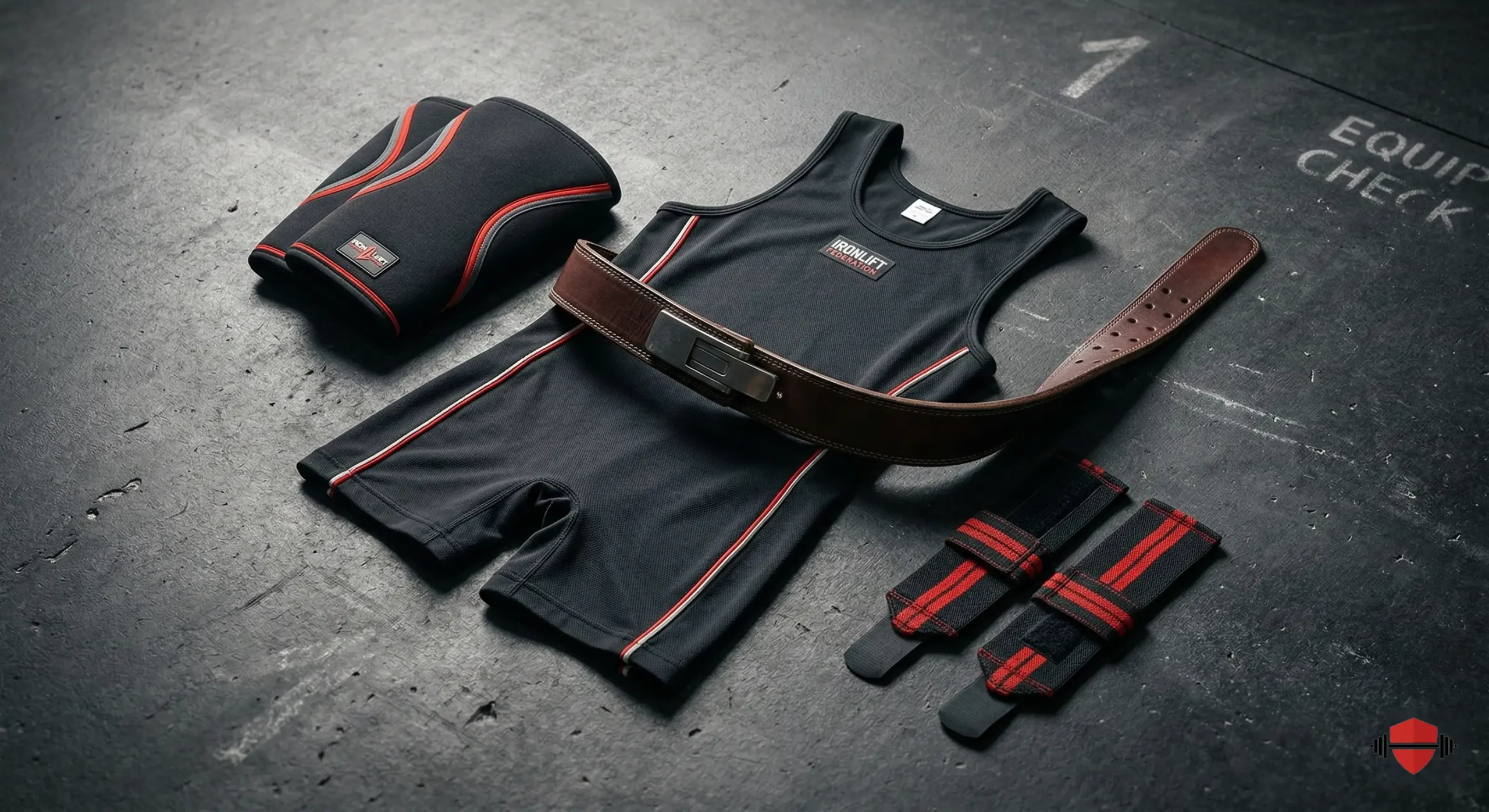
Covered equipment in this category:
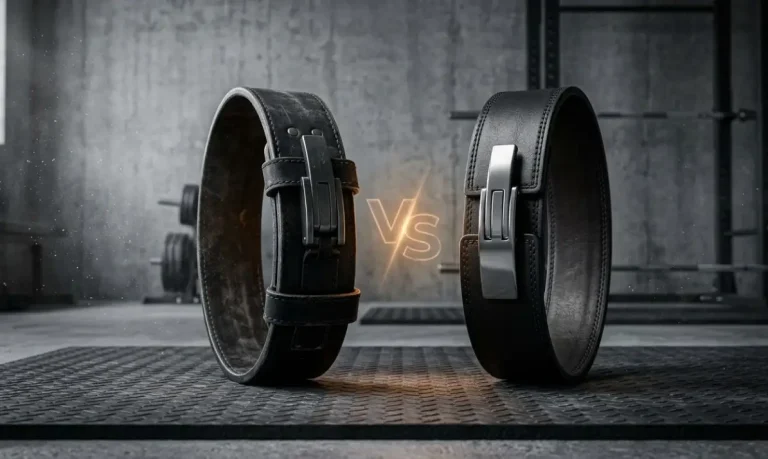
- Lifting Belts — Both lever and prong-style belts. Width and thickness requirements apply in addition to brand approval.
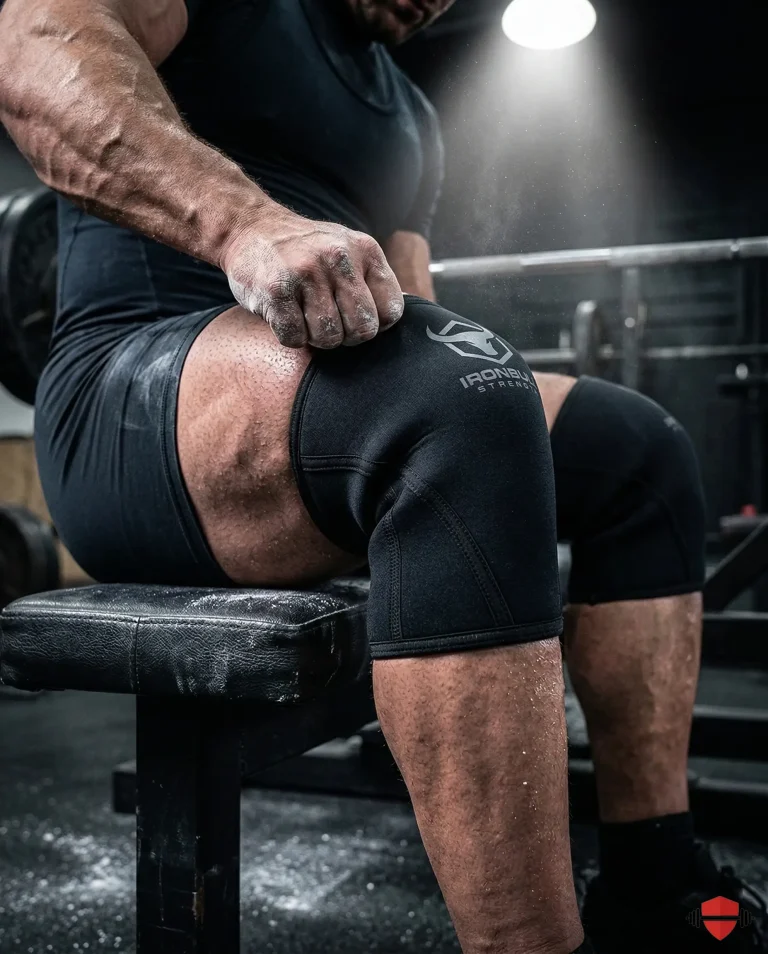
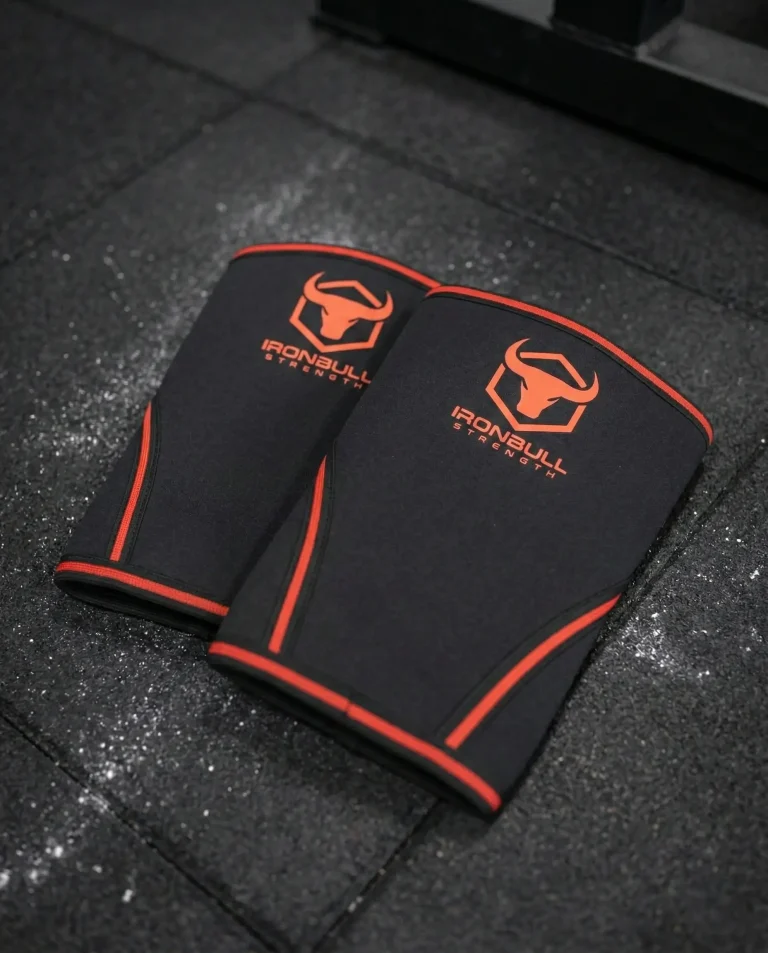
- Knee Sleeves — Maximum 30 cm in length. Only neoprene material is permitted for Classic division.
- Wrist Wraps — Maximum 1 metre in Classic Powerlifting, 2 metres in Equipped. The wrap must be from an approved brand.
- Singlets — The singlet (lifting suit) must be from an approved brand and must fit correctly per IPF spec — no excessively loose fabric.
- Deadlift Suits — Required in the Equipped division. Must be from an approved brand with no more than one ply.
- Knee Wraps — Equipped division only. Maximum 2.5 metres in length.
💡 PRO TIP: Even if your belt is the correct width (10 cm max, 13 mm max thickness) and your knee sleeves are the right length, if the specific product is not listed, you will be turned away. Always cross-reference the model — not just the brand.
Category B — Personal Equipment (Technical Specifications Only)
These items do not need to be from an approved brand. However, they must conform strictly to the dimensional and material specifications outlined in the IPF Technical Rules. Any brand is permitted, provided the specs are met.
Covered equipment in this category:
- T-Shirts — Must have short sleeves. Sleeves must not extend past the elbow. No compression or supportive material. Collar must not be turtleneck style.
- Underwear / Briefs — Must be worn under the singlet. No supportive material, no briefs with leg length that extends below the singlet.
- Socks — May extend to just below the knee. In the deadlift, long socks (covering the shins) are required to protect the bar and the lifter. Standard athletic socks are acceptable.
💡 PRO TIP: Buying a cheap singlet from a non-listed brand and pairing it with a Category A belt from SBD will get you disqualified on the singlet, not saved by the belt. Every Category A item must be individually listed.
Category C — Footwear
The IPF does not maintain an approved brand list for footwear. Instead, footwear must comply with the following rules:
- Squat shoes — Any shoe with a raised heel is permitted. There is no heel height restriction explicitly stated, though extremely platform-style shoes are uncommon and may draw scrutiny.
- Deadlift shoes — Low-profile or flat-soled shoes are standard. Many lifters use deadlift slippers or minimalist shoes. The shoe must fully enclose the foot.
- Combination shoes — A neutral trainer is acceptable for both squat and deadlift if the lifter prefers a single shoe.
- Barefoot deadlifting — Is NOT permitted. Footwear must be worn for all three lifts.
💡 PRO TIP: If you squat in heeled shoes and pull in deadlift slippers, bring both pairs to the meet. Equipment check officials will want to see what you are wearing on the platform.
Related: Check out our full review of these IPF-legal sleeves here
Section 2: IPF Approved Brands — 2023–2026 Approval Cycle Overview
The table below summarises the major brands approved during the current 2023–2026 cycle. This is a general overview based on commonly approved products. Always verify each specific product model on the official IPF website, as approvals are model-specific, not blanket brand approvals.
Note: ✓ = Category includes at least one approved model from this brand. – = No approved models currently listed in this category for this brand. This table is for guidance only — always verify the specific model.
| Brand | Belts | Knee Sleeves | Wrist Wraps | Singlets | DL Suit | Knee Wraps |
| SBD | ✓ | ✓ | ✓ | ✓ | – | ✓ |
| Eleiko | ✓ | ✓ | ✓ | ✓ | ✓ | – |
| A7 | ✓ | ✓ | ✓ | ✓ | – | – |
| Inzer | ✓ | ✓ | ✓ | ✓ | ✓ | ✓ |
| Titan | ✓ | ✓ | ✓ | ✓ | ✓ | ✓ |
| Rogue | ✓ | – | ✓ | – | – | – |
| Hansu | ✓ | ✓ | ✓ | ✓ | ✓ | ✓ |
| Gymreapers | ✓ | ✓ | ✓ | – | – | – |
Brand Spotlight: Key Notes for Competition
SBD — The gold standard for IPF competition. Their knee sleeves, belts, and wraps are among the most frequently seen on the platform at World Championships. The SBD lever belt is particularly popular.
Eleiko — The official barbell and platform equipment supplier of the IPF. Their lifting gear meets every standard and is trusted by elite-level athletes globally.
A7 — Particularly dominant in the singlet and meet shirt space. A7’s Bar Grip singlets are extremely popular due to their tacky material, which helps keep the bar positioned during the squat.
Inzer & Titan — Long-standing pillars of the powerlifting gear market. Both offer comprehensive ranges across all equipment categories, with strong Equipped division lineups.
Hansu — A growing brand particularly popular in Asian-affiliated IPF meets. Full range across most categories.
Gymreapers — Approved for belts, sleeves, and wraps, making them a solid budget-friendly entry point for newer competitive lifters.
💡 PRO TIP: SBD gear is widely accepted at every IPF-affiliated meet worldwide. If you are unsure what brand to invest in for your first competition, SBD’s belt and knee sleeves are a reliable, future-proof choice.
Section 3: Common Equipment Mistakes That Lead to Disqualification
The equipment check at a sanctioned meet is not a formality. Officials are trained to identify non-compliant gear, and they will pull lifters from the platform if anything is out of order. These are the most frequent violations seen at the equipment check table.
| Common Mistake | Why It Gets Flagged | The Fix |
| Wrist wraps over 100 cm | IPF maximum is 1 m for Classic, 2 m for Equipped | Measure before every meet — wraps stretch with use |
| Non-approved lever belt | Many lever belts lack IPF approval despite meeting spec | Check the exact model on the official list |
| Faded/missing IPF logo | Equipment checkers cannot confirm approval status | Replace gear that is worn or has a peeling logo |
| Unapproved singlet brand | Generic or budget brands rarely appear on the list | Only purchase singlets from listed brands |
| Knee sleeves over 30 cm | Max length is 30 cm per IPF rules | Measure from top to bottom edge before use |
| Non-compliant shirt logos | Logos larger than 6 cm x 6 cm are banned | Check your brand’s logo dimensions carefully |
The Lever Belt Trap
This deserves special attention. Lever belts are popular — they are fast to put on and off, and they provide excellent support. However, a significant number of lever belts on the market look compliant but are not on the IPF approved list. The Inzer Forever Lever Belt and SBD lever belt are approved. Many Chinese-manufactured lever belts sold through e-commerce platforms are not, even if they meet the width and thickness specifications. Always search for the specific product name on the official list — not just the brand.
💡 PRO TIP: Run a test equipment check on yourself at least two weeks before your meet. Put on every piece of gear you plan to use, confirm it is on the approved list, and check each logo. Two weeks gives you time to source a replacement if anything is wrong.
Section 4: How to Identify the Official IPF Approved Logo on Your Gear
Every item of approved personal equipment must display the official IPF Approved logo visibly on the product itself. Equipment check officials use this logo — in addition to the official list — to verify compliance.
What the Logo Looks Like
- The logo reads ‘IPF APPROVED’ in bold, clearly legible text.
- It is typically rectangular or shield-shaped, depending on the manufacturer’s design implementation.
- It includes the IPF name and often the approval cycle year (e.g., 2023–2026).
- The logo is woven, embroidered, or heat-stamped directly into the fabric or surface of the product — not printed on a paper tag or hang tag only.
- Colour varies by brand but must be legible. Black on white, white on black, and red variants are common.
What to Watch Out For
- Faded or peeling logos — worn gear may no longer have a visible approval logo, which is grounds for rejection even if the product itself is on the list.
- Counterfeit logos — some non-approved products include text like ‘Powerlifting Approved’ or an unofficial logo. This does not constitute IPF approval.
- Older cycle logos — gear approved in a previous cycle (e.g., 2019–2022) may still carry that logo. If the current 2023–2026 cycle is not reflected, the item may not be on the current list.
- Generic branding — some manufacturers sell products under multiple brand names. The logo on the physical item and the brand on the official list must match.
💡 PRO TIP: If the IPF Approved logo on your gear is cracked, faded, or partially missing, take a high-resolution photo and compare it with the product listing on the official IPF website. When in doubt, contact your national federation’s equipment committee before competition day.
Section 5: Quick-Reference Compliance Checklist
Use this checklist in the weeks before your meet to confirm every item you plan to use on the platform is legal.
- Belt — Is the specific model listed on the current IPF Approved List? Is the width 10 cm or less? Is the thickness 13 mm or less?
- Knee Sleeves — Is the brand and model listed? Are they 30 cm or less in length? Are they neoprene (Classic division)?
- Wrist Wraps — Are they from an approved brand and model? Are they 1 m or less (Classic) / 2 m or less (Equipped)?
- Singlet — Is the brand and model listed? Does it fit correctly with no excessive looseness?
- T-Shirt — Are the sleeves short and non-compressive? Does the collar comply?
- Socks — Are they appropriate length for each lift? Long socks ready for the deadlift?
- Footwear — Do you have enclosed shoes for all three lifts?
- All IPF Approved logos — Are they visible, legible, and in good condition on every item?
💡 PRO TIP: Screenshot the relevant pages of the IPF Approved Equipment PDF for each item you own. Having the exact model name on your phone during equipment check can resolve any ambiguity immediately — and shows officials you have done your homework.
Conclusion: Always Verify Before You Compete
The IPF Approved List is not bureaucracy for its own sake. It is a standardisation system designed to ensure that every athlete competes on a level playing field — where the result comes down to strength, technique, and preparation, not equipment advantage.
The 2023–2026 approval cycle is the definitive reference for all IPF-affiliated competitions through the end of the cycle. Whether you are stepping onto the platform at a local club meet or competing at nationals, the rules are the same: if it is not on the list, it is not going on your body.
Here is your final action list before every major meet:
- Visit powerlifting.sport and download the latest version of the IPF Approved Equipment PDF.
- Cross-reference every item you plan to use — by brand AND specific model name.
- Physically inspect every logo on every piece of gear for legibility and condition.
- If anything is unclear, contact your national federation for clarification before competition day — not on the morning of.
Your training earns the result. Your preparation earns the platform. Do not let a preventable equipment issue stand between you and the lift you have worked for.
Lift smart. Lift legal. Lift heavy.
Disclaimer: This guide is for informational purposes and reflects the 2023–2026 IPF approval cycle as of the publication date. The official IPF Approved Equipment List is updated periodically. Always verify current approvals at www.powerlifting.sport before competing.